Traditional Banska Kapama: Layered Sauerkraut and Mixed-Meat Clay-Pot Stew
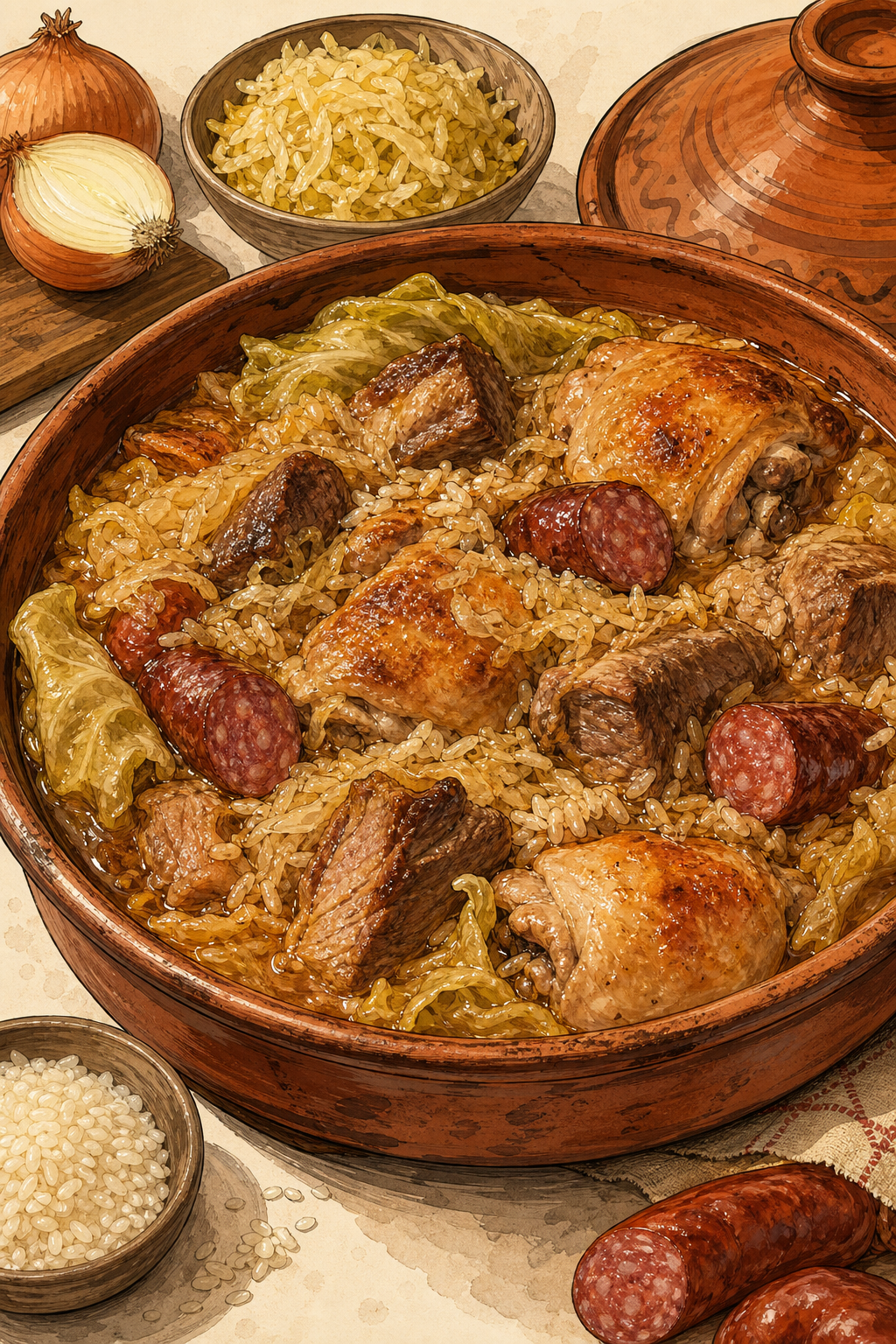
Banska kapama is a festive Pirin clay-pot dish of sauerkraut, rice, pork, beef, chicken and smoked sausage layered with red wine and sauerkraut brine, sealed under a dough rim and baked very slowly. The finished dish is moist but not soupy, with tender meats and cabbage served without whole spices.
Plan and shop
Save this recipe for real-life cooking
Build a local shopping list or place this recipe into a weekly meal plan. No account is required.
Illustrated cooking guide
Step-by-step visual method
A polished English infographic for the whole cooking flow, paired with the full written recipe below for detail and SEO.
Written method
Instructions
Read through once, then cook at your own pace with the illustrated guide above.
- 1
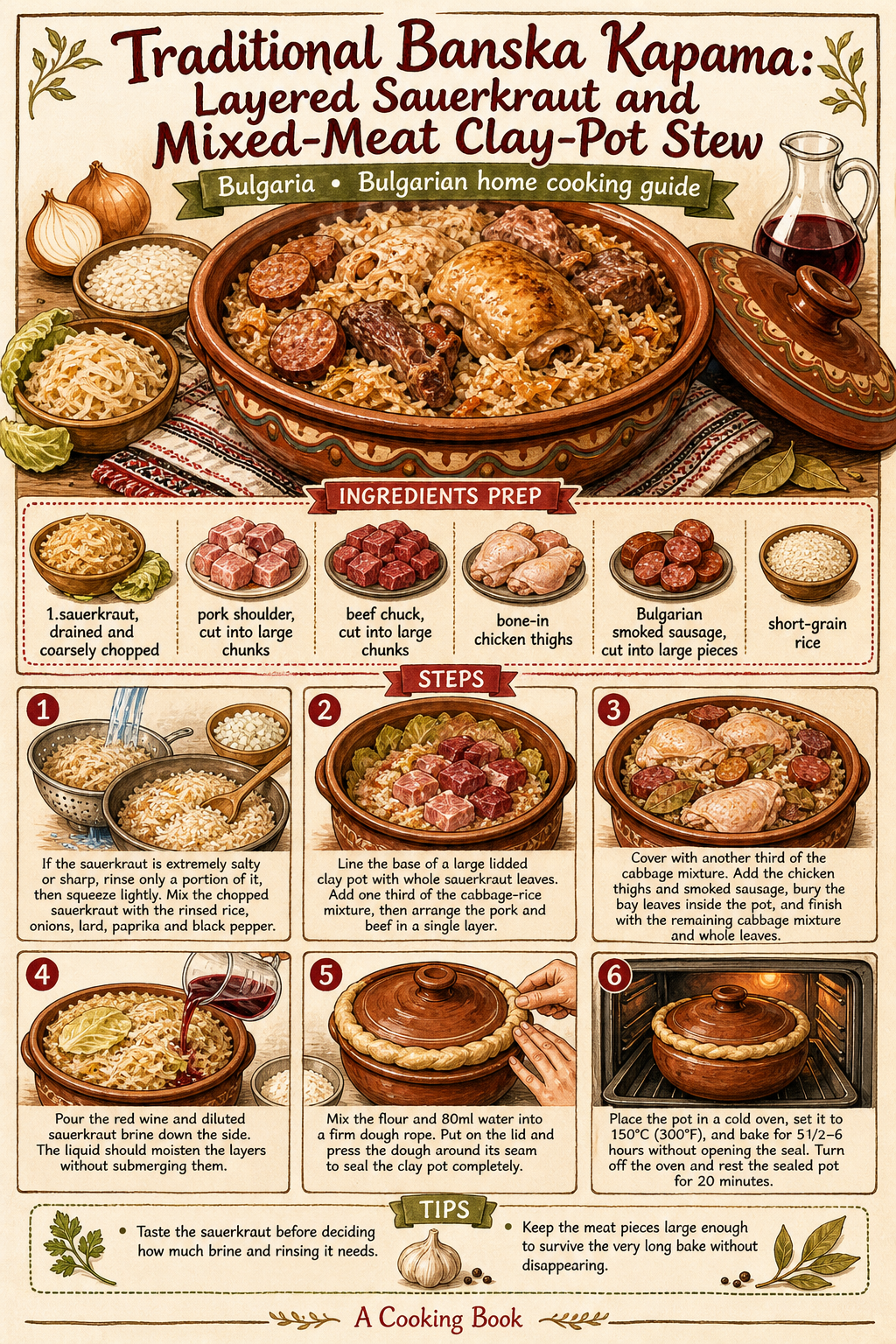
If the sauerkraut is extremely salty or sharp, rinse only a portion of it, then squeeze lightly. Mix the chopped sauerkraut with the rinsed rice, onions, lard, paprika and black pepper.
- 2
Line the base of a large lidded clay pot with whole sauerkraut leaves. Add one third of the cabbage-rice mixture, then arrange the pork and beef in a single layer.
- 3
Cover with another third of the cabbage mixture. Add the chicken thighs and smoked sausage, bury the bay leaves inside the pot, and finish with the remaining cabbage mixture and whole leaves.
- 4
Pour the red wine and diluted sauerkraut brine down the side. The liquid should moisten the layers without submerging them.
- 5
Mix the flour and 80ml water into a firm dough rope. Put on the lid and press the dough around its seam to seal the clay pot completely.
- 6
Place the pot in a cold oven, set it to 150°C (300°F), and bake for 5 1/2-6 hours without opening the seal. Turn off the oven and rest the sealed pot for 20 minutes.
- 7
Break the dough seal carefully. Find and discard both bay leaves, then lift portions through the layers so each serving contains sauerkraut, rice and mixed meats; no bay leaves or whole spices belong on the plate.
Cook notes
Tips
Taste the sauerkraut before deciding how much brine and rinsing it needs.
Keep the meat pieces large enough to survive the very long bake without disappearing.
Do not open the dough-sealed pot during cooking; the trapped steam is central to kapama.
Cook smarter
Helpful notes
Practical storage, serving, swap, and troubleshooting notes for a better first try.
Storage Tips
- Store in an airtight container in the refrigerator for up to 3 days.
- To freeze leftovers, portion them into airtight containers or freezer bags before freezing.
- Reheat covered in the oven with a spoonful of water only if the cabbage has become dry.
Substitutions
- A Balkan-style smoked pork sausage can stand in for Bulgarian smoked sausage.
- A little water can replace the red wine, but keep the sauerkraut brine for the characteristic acidity.
What to Serve With
- Crusty village bread.
- Pickled peppers or a simple winter salad.
- A glass of dry Bulgarian red wine.
Common Mistakes
- Adding broth until the layers are submerged, which makes kapama soupy.
- Shortening the low six-hour bake or opening the sealed pot repeatedly.
- Leaving bay leaves in the serving dish or using them as garnish.
Recipe FAQ
Can I use different types of meat?
Household combinations vary, but festive kapama is defined by several meats. Keep pork, a smoked sausage and at least one other meat rather than reducing it to a single-meat stew.
How do I store leftovers?
Cool it promptly and refrigerate it in a covered container for up to 3 days.
Can I freeze the stew?
Yes. Freeze cooled portions for up to 2 months, thaw overnight in the refrigerator and reheat thoroughly.
Kitchen tools
Helpful Tools for This Recipe
A light, editable placeholder for future partner recommendations. No real affiliate links are enabled yet.
Rice cooker
Good for steady rice, grains, and meal-prep bowls.
Baking sheet
Useful for roasting, baking, broiling, and sheet-pan prep.
Blender
Helpful for smooth sauces, soups, marinades, and purees.
Saucepan
Useful for simmering sauces, soups, grains, and small-batch stews.
Chef knife
A basic prep tool for vegetables, herbs, aromatics, and proteins.
Some links may be affiliate links. As an Amazon Associate or partner, we may earn from qualifying purchases when enabled. Read the Affiliate Disclosure.
Cook along weekly
Want more illustrated recipes like Traditional Banska Kapama: Layered Sauerkraut and Mixed-Meat Clay-Pot Stew?
Join the World Recipe Letter for global home-cooking ideas and visual recipe guides.
Join the World Recipe Letter
Get 5 illustrated recipes every week.
No account needed. Unsubscribe when email delivery is connected.
Cook next
You might also like
More flavors from the same country or nearby pantry style.
Traditional Bulgarian Shopska Salad with Tomatoes, Cucumbers and Sirene
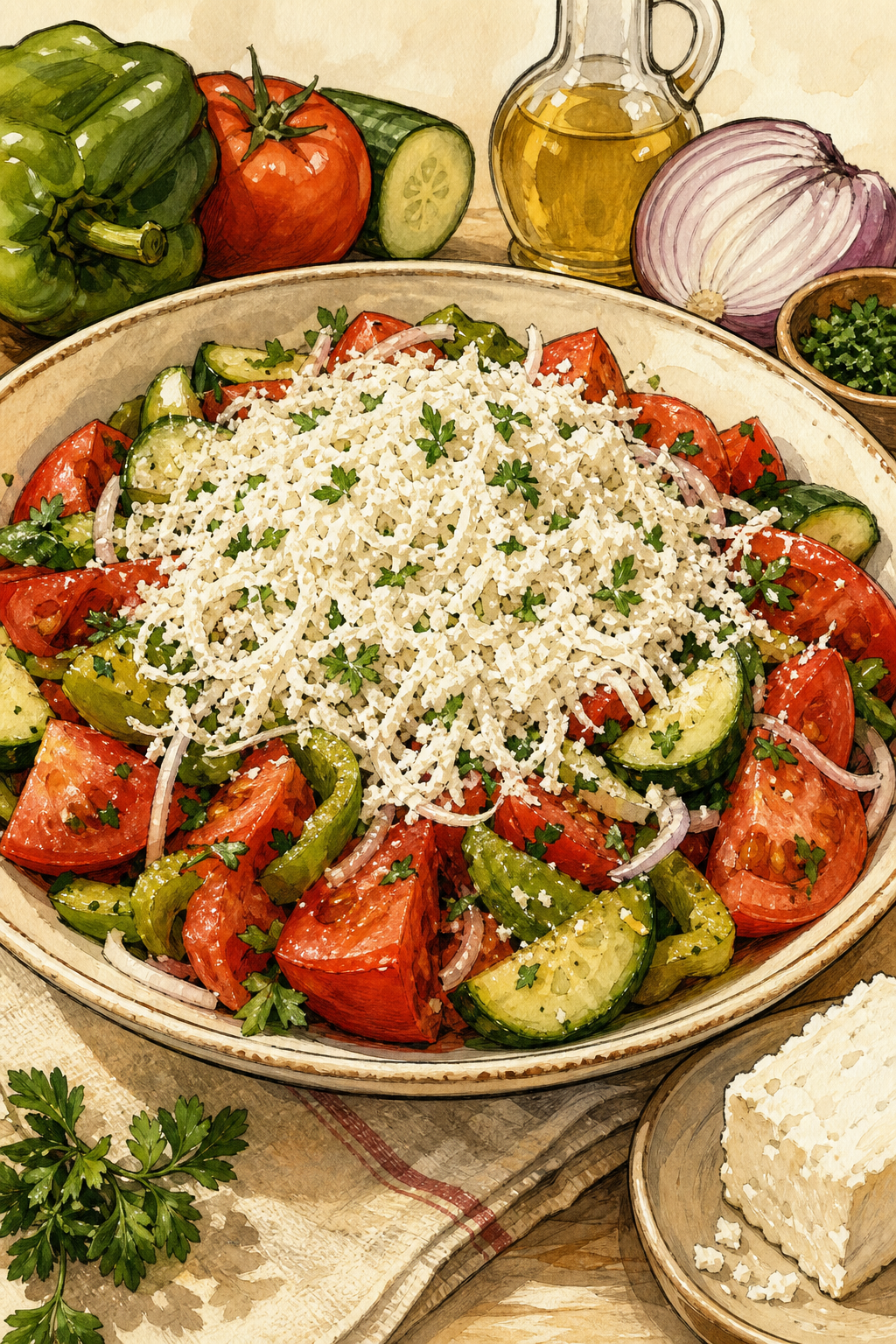
Shopska salad is a Bulgarian summer salad of ripe tomatoes, cucumber, pepper and a little onion, lightly dressed with sunflower oil and finished with a thick snowy cap of finely grated sirene. The cheese stays on top rather than being tossed through the vegetables.
Traditional Bulgarian Banitsa with Sirene and Eggs
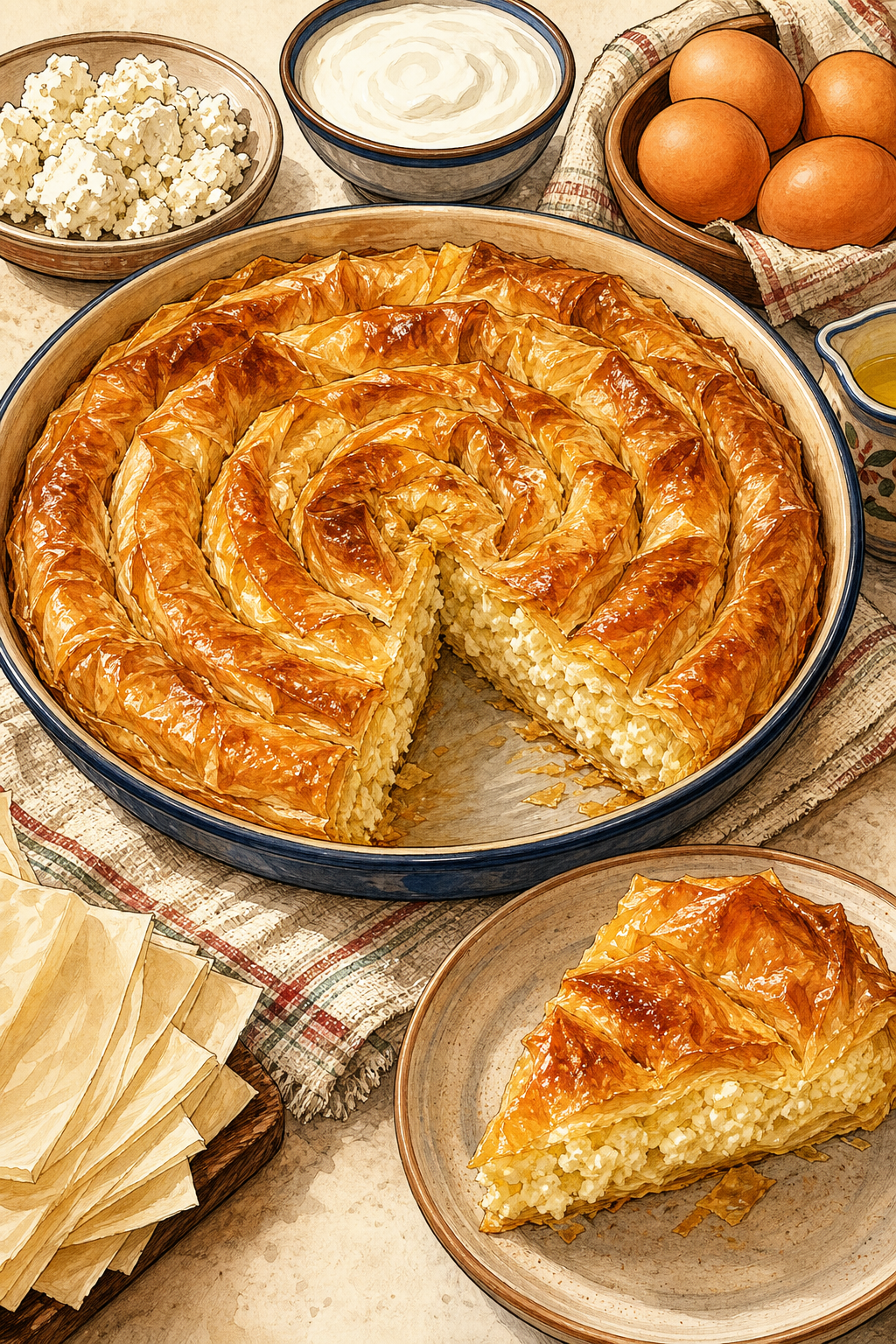
Traditional Bulgarian banitsa is built from thin phyllo sheets brushed with butter or sunflower oil and distributed with a loose filling of sirene, eggs and yogurt. The filled sheets are gently rolled into a round pan so the pastry stays crisp outside and tender between the folds.
Traditional Bulgarian Tarator: Cold Yogurt and Cucumber Soup
Tarator is Bulgaria's cold yogurt and cucumber soup, loosened with icy water and flavored with garlic, dill, walnuts and sunflower oil. It should be pourable, chilled and speckled with cucumber and finely crushed walnut rather than thick like a dip.