Traditional Bulgarian Pork Kavarma in a Clay Pot
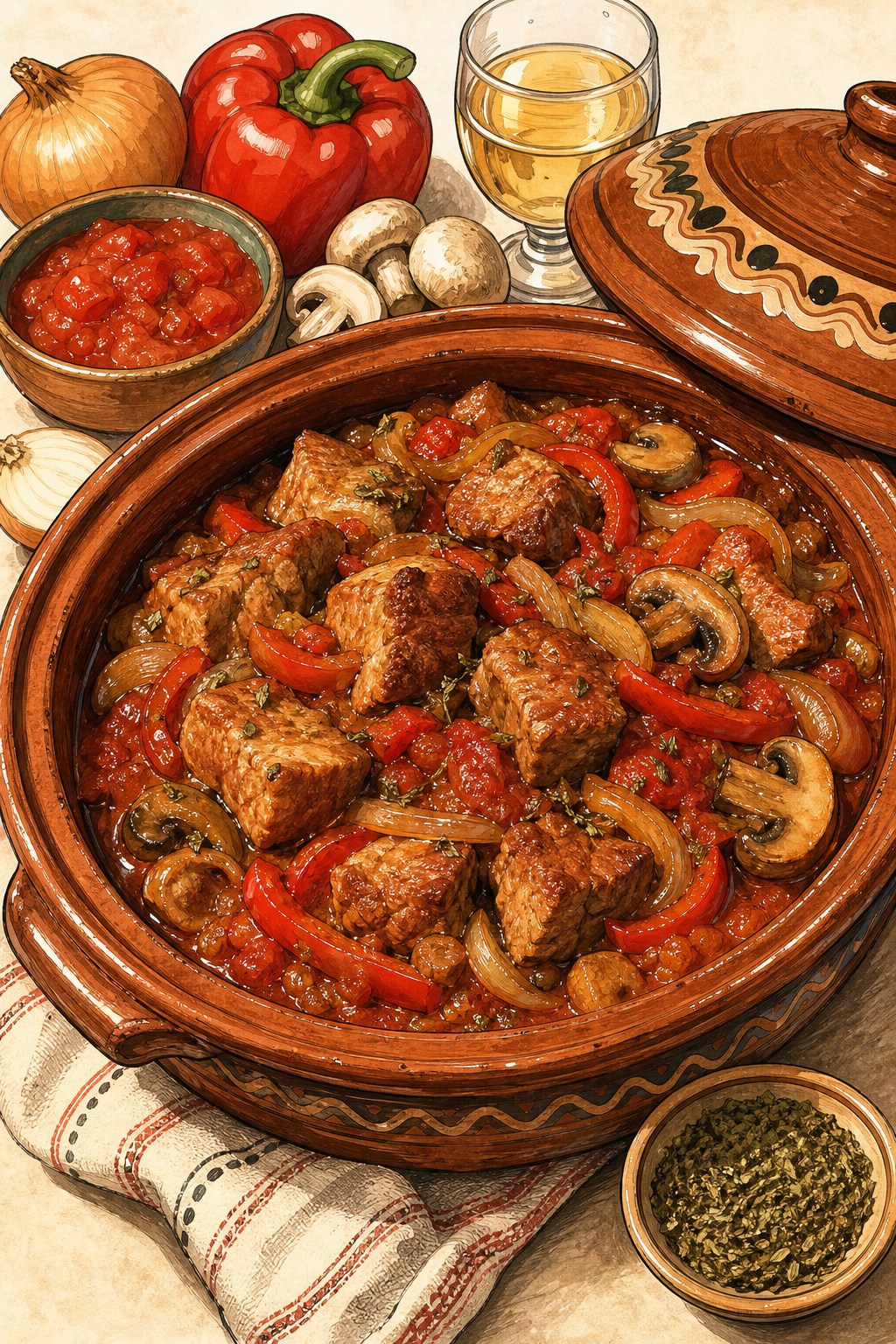
Bulgarian pork kavarma is a slow-cooked dish of browned pork, onions, peppers and mushrooms in a restrained tomato, wine and paprika sauce. It finishes in covered clay pots with chubritsa, producing tender meat and a concentrated sauce rather than a broth-heavy stew.
Plan and shop
Save this recipe for real-life cooking
Build a local shopping list or place this recipe into a weekly meal plan. No account is required.
Illustrated cooking guide
Step-by-step visual method
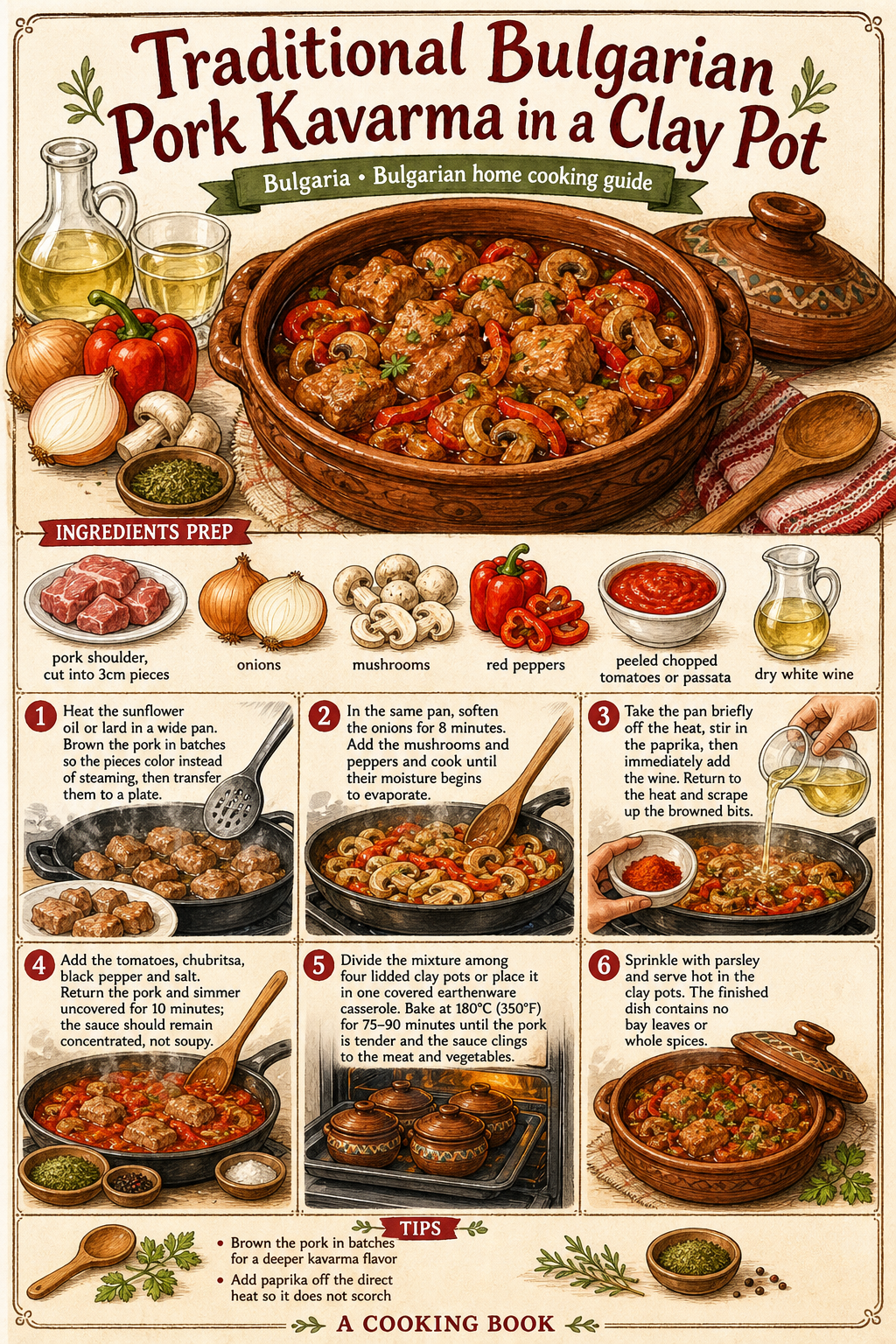
A polished English infographic for the whole cooking flow, paired with the full written recipe below for detail and SEO.
Written method
Instructions
Read through once, then cook at your own pace with the illustrated guide above.
- 1
Heat the sunflower oil or lard in a wide pan. Brown the pork in batches so the pieces color instead of steaming, then transfer them to a plate.
- 2
In the same pan, soften the onions for 8 minutes. Add the mushrooms and peppers and cook until their moisture begins to evaporate.
- 3
Take the pan briefly off the heat, stir in the paprika, then immediately add the wine. Return to the heat and scrape up the browned bits.
- 4
Add the tomatoes, chubritsa, black pepper and salt. Return the pork and simmer uncovered for 10 minutes; the sauce should remain concentrated, not soupy.
- 5
Divide the mixture among four lidded clay pots or place it in one covered earthenware casserole. Bake at 180°C (350°F) for 75-90 minutes until the pork is tender and the sauce clings to the meat and vegetables.
- 6
Sprinkle with parsley and serve hot in the clay pots. The finished dish contains no bay leaves or whole spices.
Cook notes
Tips
Brown the pork in batches for a deeper kavarma flavor.
Add paprika off the direct heat so it does not scorch.
Use only enough tomato and wine to make a concentrated sauce.
Cook smarter
Helpful notes
Practical storage, serving, swap, and troubleshooting notes for a better first try.
Storage Tips
- Refrigerate leftovers within 2 hours of cooking.
- For longer storage, freeze the Kavarma in a sealed container for up to 3 months.
- Reheat gently over low heat to maintain tenderness.
Substitutions
- Use a heavy covered casserole if clay pots are unavailable.
- Use dry red wine for a deeper regional variation.
What to Serve With
- Crusty bread for soaking up the sauce.
- Mashed potatoes for a comforting side.
- Sliced pickles to cut through the richness.
Common Mistakes
- Adding enough broth to turn kavarma into soup.
- Using thyme as a replacement for chubritsa.
- Leaving bay leaves or whole spices as garnish in the serving pot.
Recipe FAQ
What type of meat is best for Kavarma?
Pork shoulder is ideal for its tenderness and flavor.
Can I make Kavarma in a regular pot instead of clay?
Yes, but using a clay pot enhances the flavors through slow cooking.
How do I store leftovers?
Store in an airtight container in the refrigerator for up to 3 days.
Kitchen tools
Helpful Tools for This Recipe
A light, editable placeholder for future partner recommendations. No real affiliate links are enabled yet.
Baking sheet
Useful for roasting, baking, broiling, and sheet-pan prep.
Blender
Helpful for smooth sauces, soups, marinades, and purees.
Saucepan
Useful for simmering sauces, soups, grains, and small-batch stews.
Chef knife
A basic prep tool for vegetables, herbs, aromatics, and proteins.
Cutting board
Keeps prep organized for chopping, slicing, and staging ingredients.
Some links may be affiliate links. As an Amazon Associate or partner, we may earn from qualifying purchases when enabled. Read the Affiliate Disclosure.
Cook along weekly
Want more illustrated recipes like Traditional Bulgarian Pork Kavarma in a Clay Pot?
Join the World Recipe Letter for global home-cooking ideas and visual recipe guides.
Join the World Recipe Letter
Get 5 illustrated recipes every week.
No account needed. Unsubscribe when email delivery is connected.
Cook next
You might also like
More flavors from the same country or nearby pantry style.
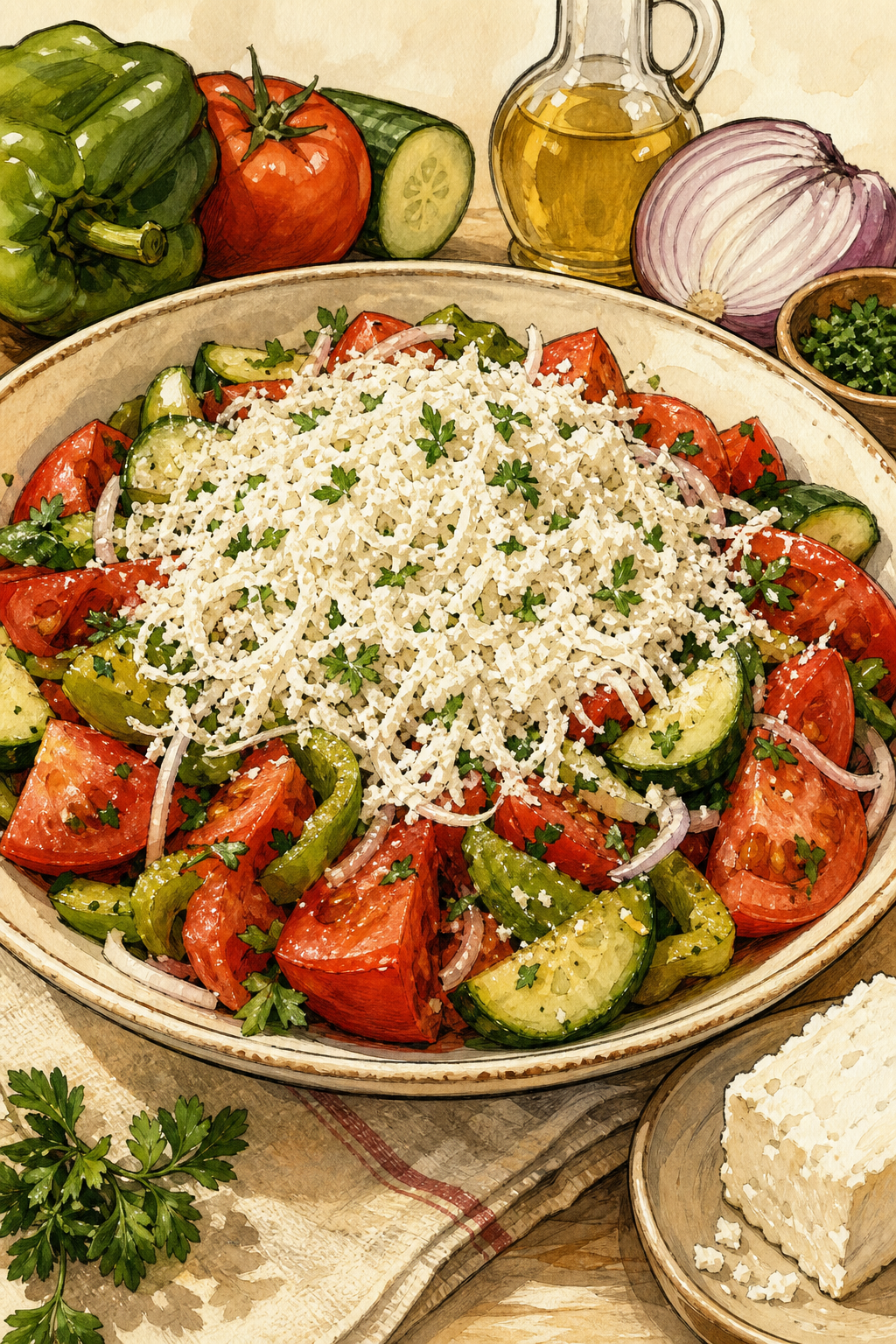
Traditional Bulgarian Shopska Salad with Tomatoes, Cucumbers and Sirene
Shopska salad is a Bulgarian summer salad of ripe tomatoes, cucumber, pepper and a little onion, lightly dressed with sunflower oil and finished with a thick snowy cap of finely grated sirene. The cheese stays on top rather than being tossed through the vegetables.
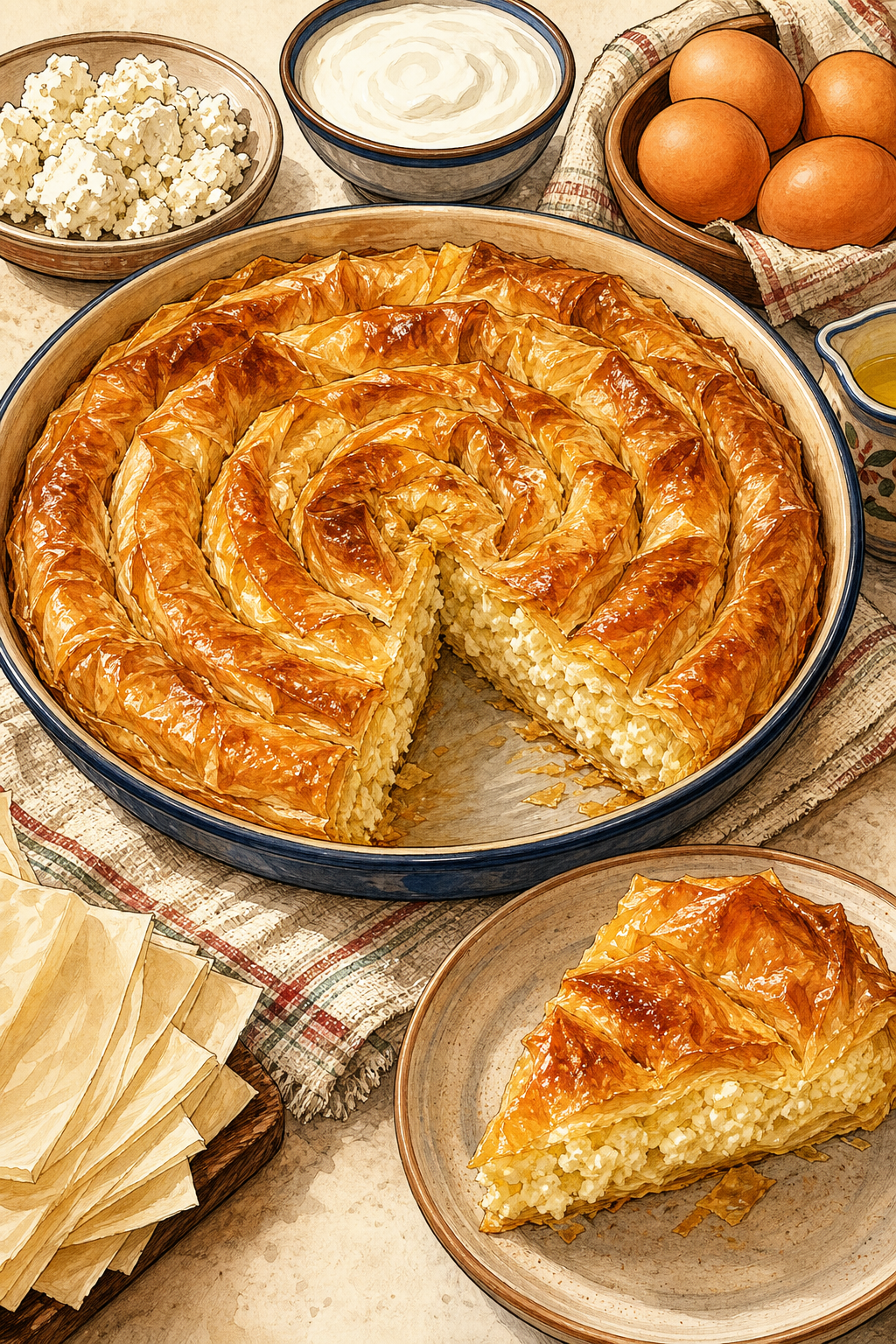
Traditional Bulgarian Banitsa with Sirene and Eggs
Traditional Bulgarian banitsa is built from thin phyllo sheets brushed with butter or sunflower oil and distributed with a loose filling of sirene, eggs and yogurt. The filled sheets are gently rolled into a round pan so the pastry stays crisp outside and tender between the folds.
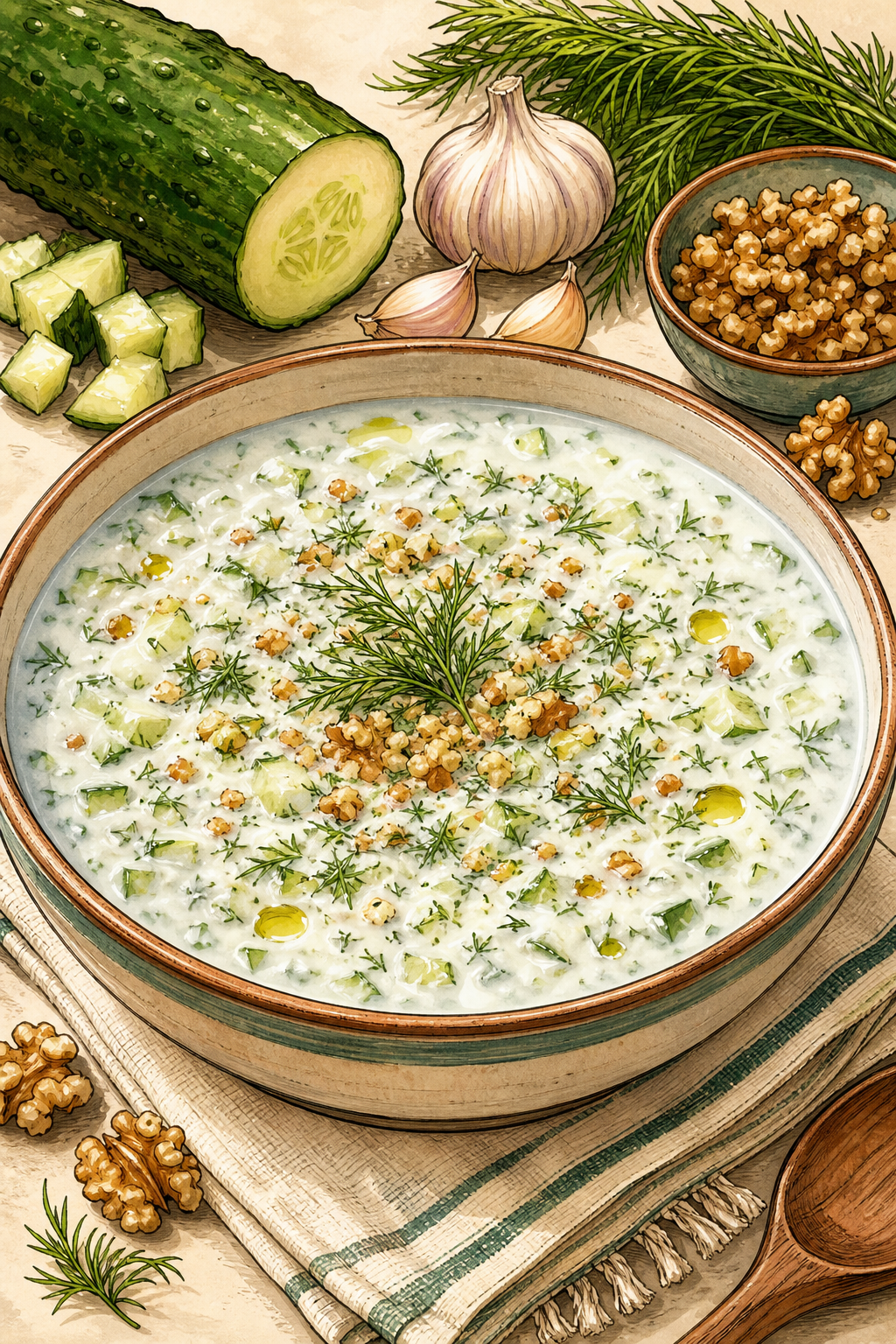
Traditional Bulgarian Tarator: Cold Yogurt and Cucumber Soup
Tarator is Bulgaria's cold yogurt and cucumber soup, loosened with icy water and flavored with garlic, dill, walnuts and sunflower oil. It should be pourable, chilled and speckled with cucumber and finely crushed walnut rather than thick like a dip.