Traditional Bulz Ciobănesc: Baked Polenta with Brânză de Burduf
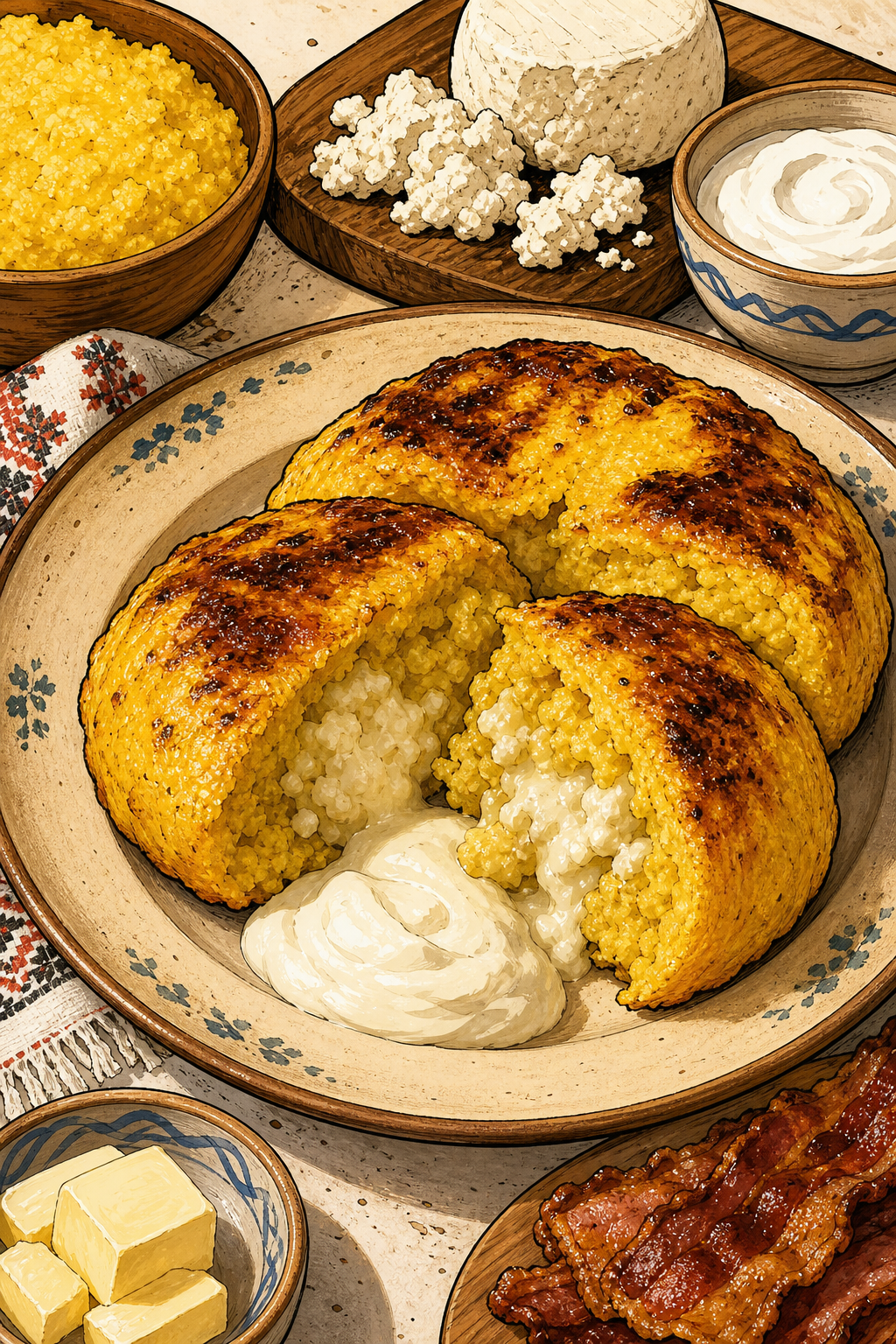
Bulz ciobănesc is a shepherd-style Romanian dish of firm mămăligă shaped into individual parcels around a molten core of brânză de burduf, then grilled or baked until the outside is lightly charred.
Plan and shop
Save this recipe for real-life cooking
Build a local shopping list or place this recipe into a weekly meal plan. No account is required.
Illustrated cooking guide
Step-by-step visual method
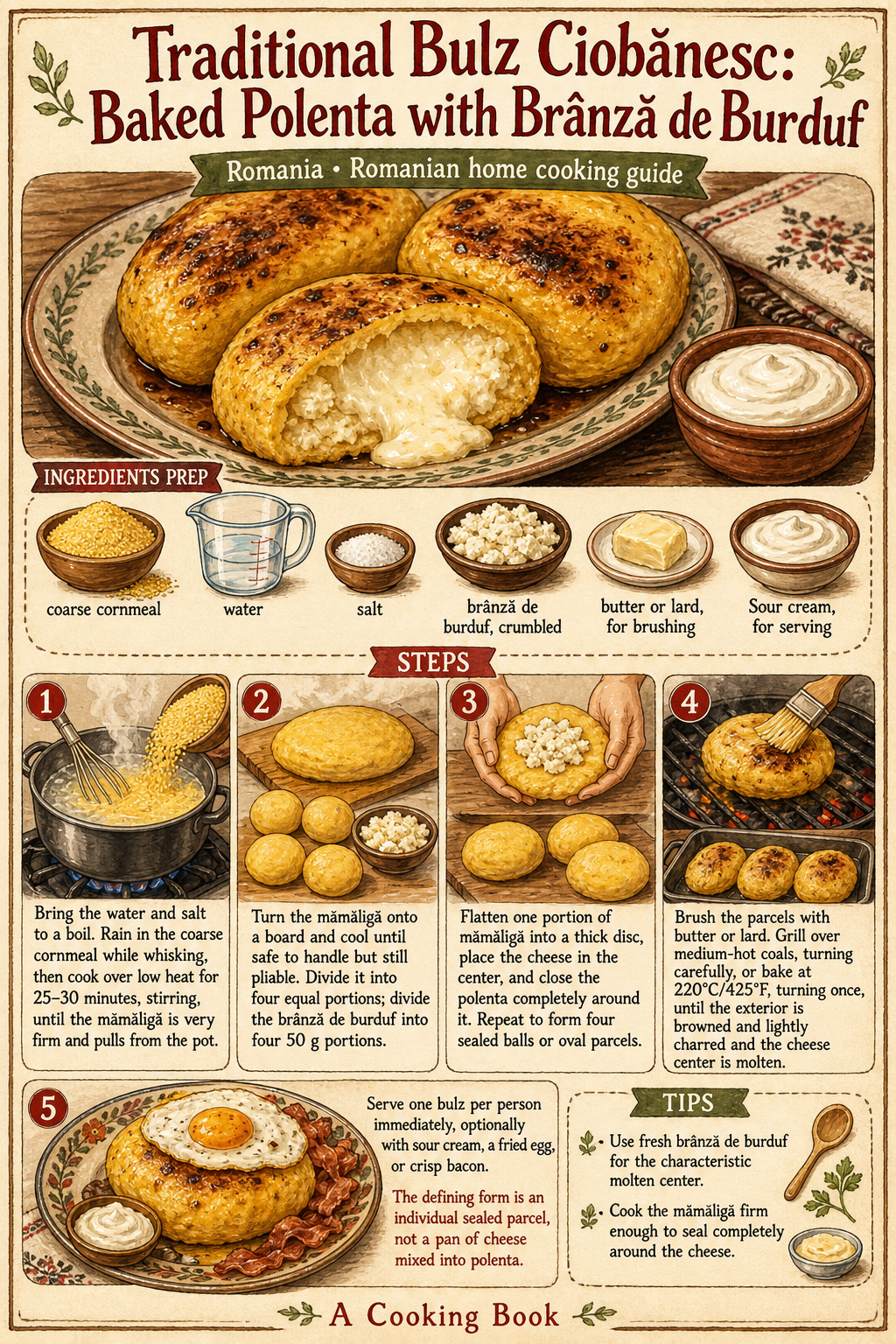
A polished English infographic for the whole cooking flow, paired with the full written recipe below for detail and SEO.
Written method
Instructions
Read through once, then cook at your own pace with the illustrated guide above.
- 1
Bring the water and salt to a boil. Rain in the coarse cornmeal while whisking, then cook over low heat for 25-30 minutes, stirring, until the mămăligă is very firm and pulls from the pot.
- 2
Turn the mămăligă onto a board and cool until safe to handle but still pliable. Divide it into four equal portions; divide the brânză de burduf into four 50 g portions.
- 3
Flatten one portion of mămăligă into a thick disc, place the cheese in the center, and close the polenta completely around it. Repeat to form four sealed balls or oval parcels.
- 4
Brush the parcels with butter or lard. Grill over medium-hot coals, turning carefully, or bake at 220°C/425°F, turning once, until the exterior is browned and lightly charred and the cheese center is molten.
- 5
Serve one bulz per person immediately, optionally with sour cream, a fried egg, or crisp bacon. The defining form is an individual sealed parcel, not a pan of cheese mixed into polenta.
Cook notes
Tips
Use fresh brânză de burduf for the characteristic molten center.
Cook the mămăligă firm enough to seal completely around the cheese.
Turn the individual parcels as they grill or bake so several sides brown.
Cook smarter
Helpful notes
Practical storage, serving, swap, and troubleshooting notes for a better first try.
Storage Tips
- Refrigerate cooled bulz parcels in an airtight container for up to 3 days.
- Reheat in a hot oven until the exterior is crisp and the cheese center is piping hot.
Substitutions
- Use another mature sheep's-milk cheese only if brânză de burduf is unavailable.
- Use coarse cornmeal rather than fine corn flour so the mămăligă is firm enough to enclose the cheese.
- Crème fraîche can replace sour cream as an optional accompaniment.
What to Serve With
- Sour cream.
- A fried egg or crisp bacon, optionally.
Common Mistakes
- Making loose polenta prevents the parcel from sealing around the cheese.
- Mixing the cheese through the polenta or baking everything in one dish loses the defining stuffed form.
- Failing to seal the parcel lets the cheese escape before the exterior chars.
Recipe FAQ
What is brânză de burduf?
Brânză de burduf is a traditional Romanian sheep cheese, known for its creamy texture and strong flavor.
Can I use another cheese instead of brânză de burduf?
A mature, salty sheep's-milk cheese can work, but brânză de burduf provides the characteristic creamy, assertive center.
How do I store leftovers?
Store any leftovers in an airtight container in the refrigerator for up to 3 days.
Kitchen tools
Helpful Tools for This Recipe
A light, editable placeholder for future partner recommendations. No real affiliate links are enabled yet.
Baking sheet
Useful for roasting, baking, broiling, and sheet-pan prep.
Skillet
Useful for browning, quick sautes, and weeknight one-pan cooking.
Chef knife
A basic prep tool for vegetables, herbs, aromatics, and proteins.
Cutting board
Keeps prep organized for chopping, slicing, and staging ingredients.
Measuring spoons
Useful for balancing spices, salt, acids, and sauces.
Some links may be affiliate links. As an Amazon Associate or partner, we may earn from qualifying purchases when enabled. Read the Affiliate Disclosure.
Cook along weekly
Want more illustrated recipes like Traditional Bulz Ciobănesc: Baked Polenta with Brânză de Burduf?
Join the World Recipe Letter for global home-cooking ideas and visual recipe guides.
Join the World Recipe Letter
Get 5 illustrated recipes every week.
No account needed. Unsubscribe when email delivery is connected.
Cook next
You might also like
More flavors from the same country or nearby pantry style.
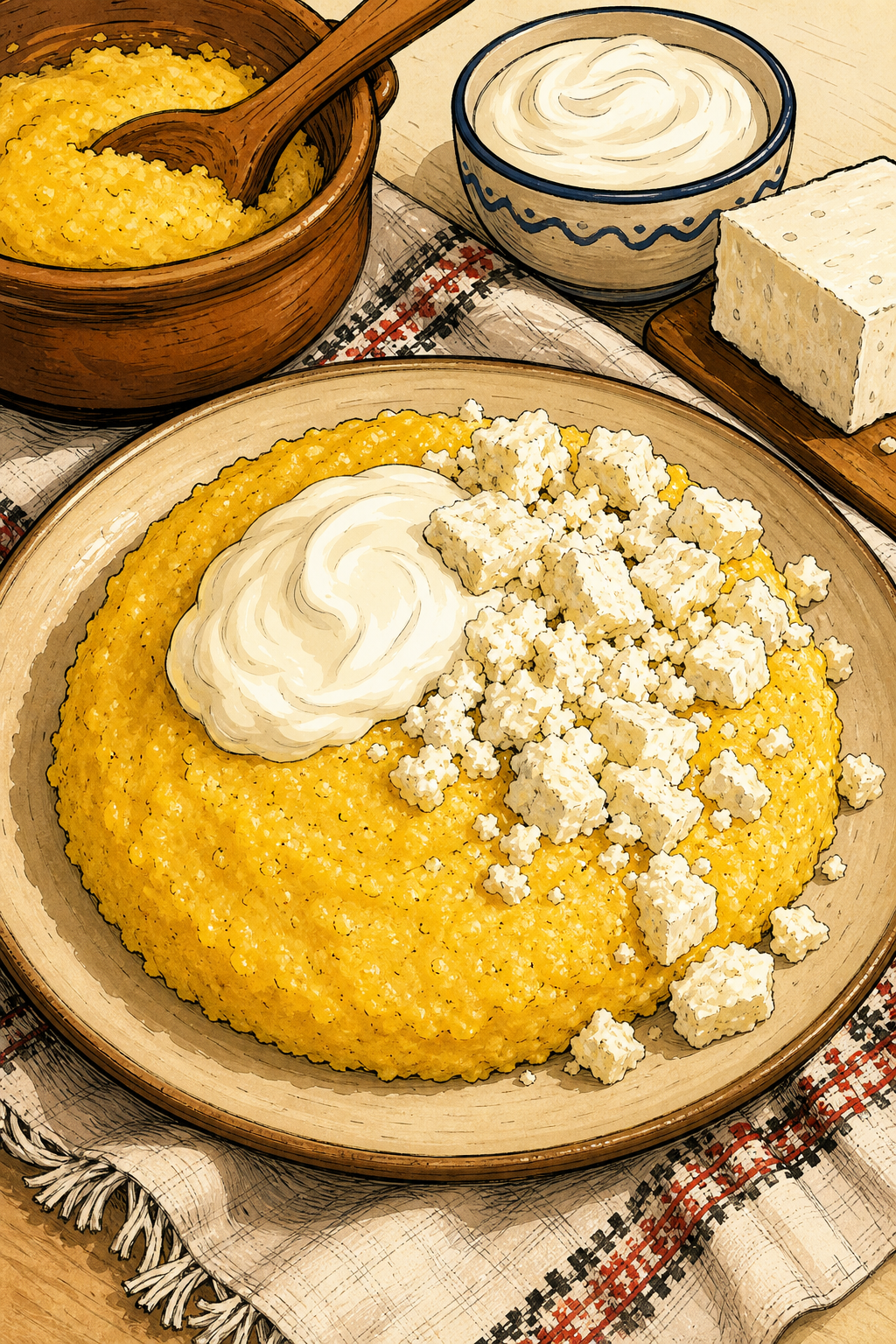
Traditional Romanian Mămăligă cu Brânză și Smântână: Cornmeal with Brined Cheese and Sour Cream
Mămăligă cu brânză și smântână pairs firm, slowly cooked Romanian cornmeal with salty Telemea and cool sour cream. The cheese and cream are served on or beside the hot mămăligă rather than cooked into it.
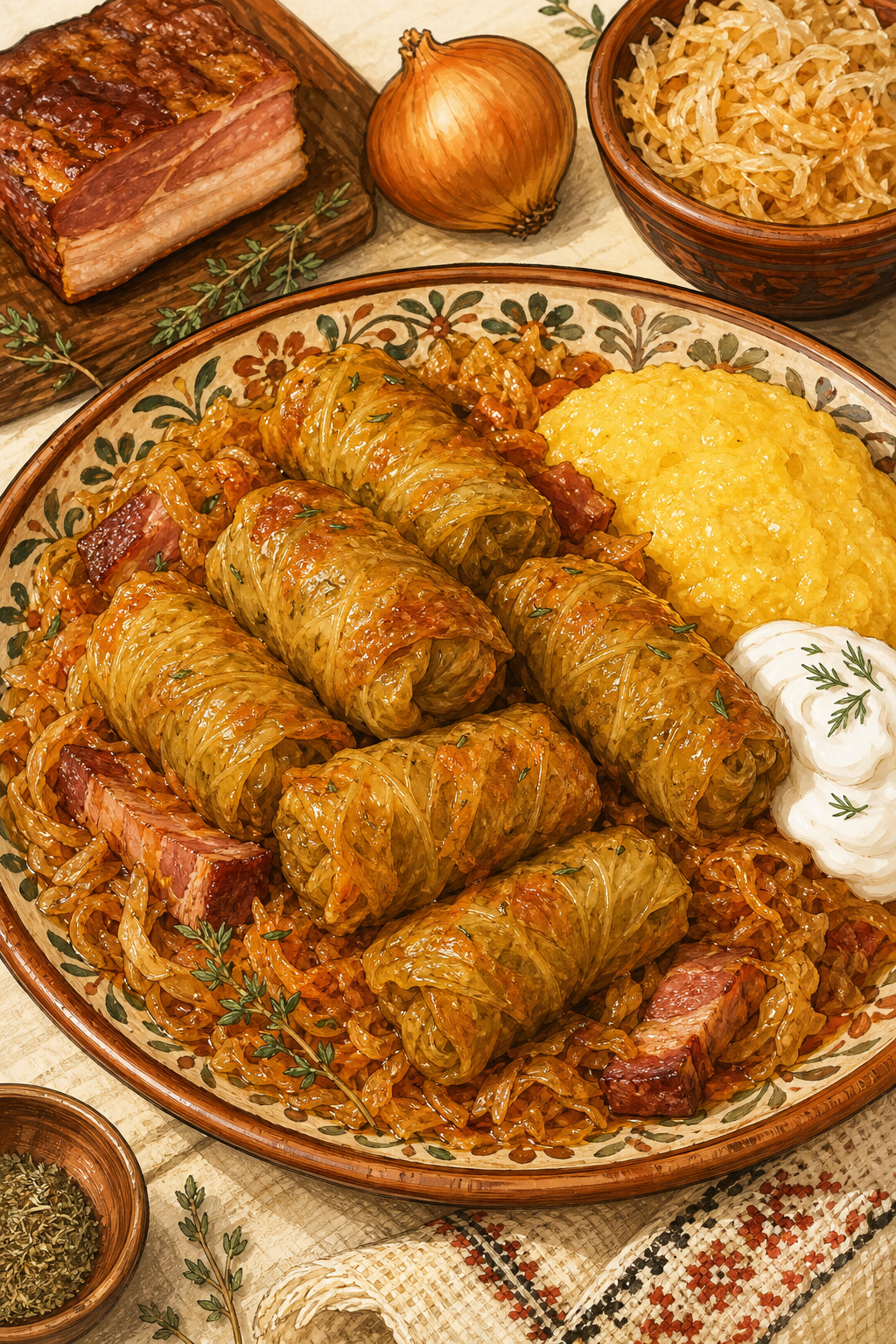
Traditional Romanian Sarmale: Pork-and-Rice Rolls in Sour Cabbage Leaves
Romanian sarmale are small pork-and-rice rolls wrapped in sour cabbage leaves and slowly simmered over shredded cabbage with a little smoked pork, thyme and tomato. They are traditionally served with mămăligă and sour cream.
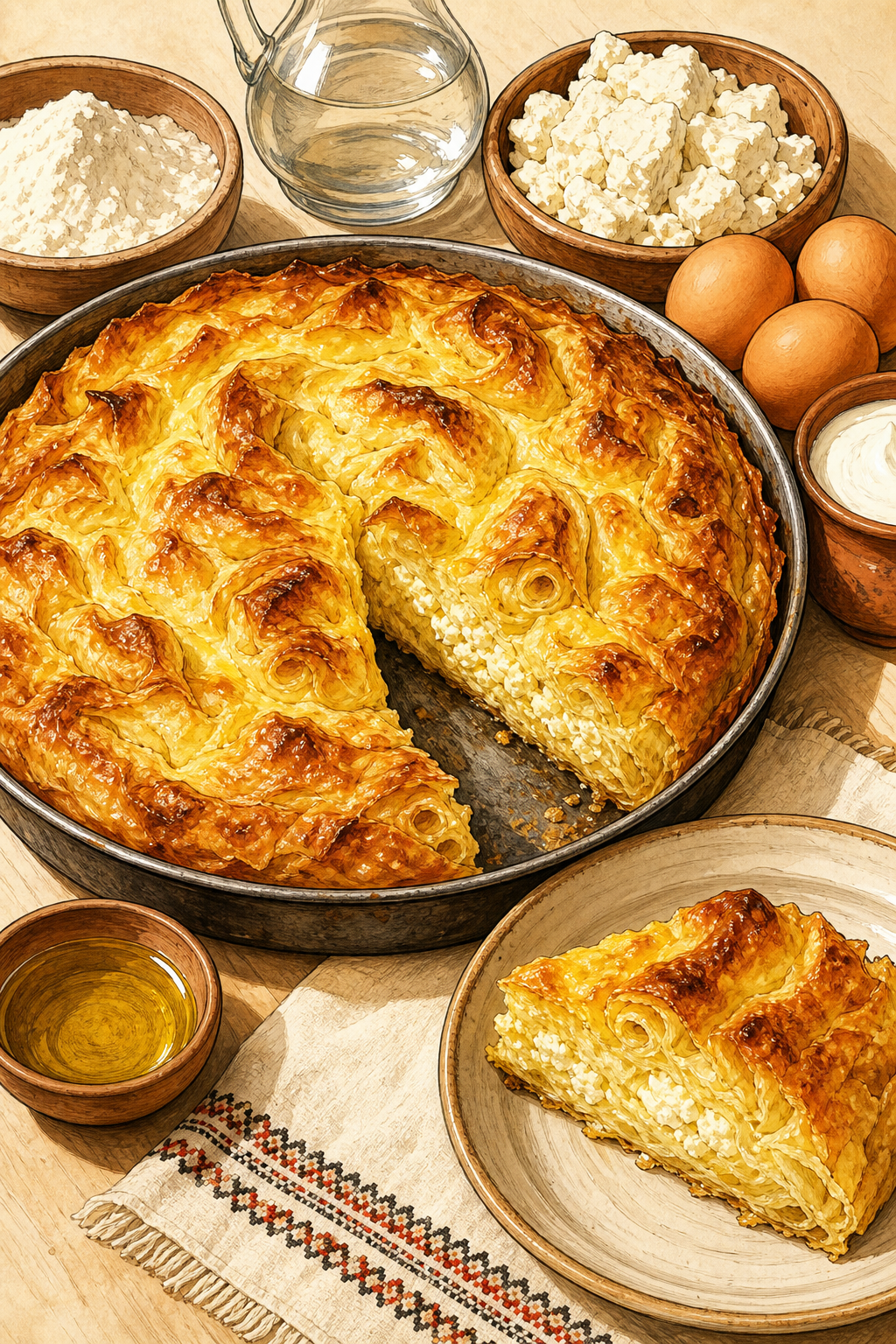
Plăcintă Dobrogeană PGI: Layered Brined-Cheese Pie with Yogurt and Eggs
Plăcintă dobrogeană PGI is made from very thin hand-stretched dough filled with salted soft cheese, gathered into ruffled rolls or coils in a tray, and baked beneath a yogurt-and-egg finish. It is not a flat stack of alternating pastry sheets.