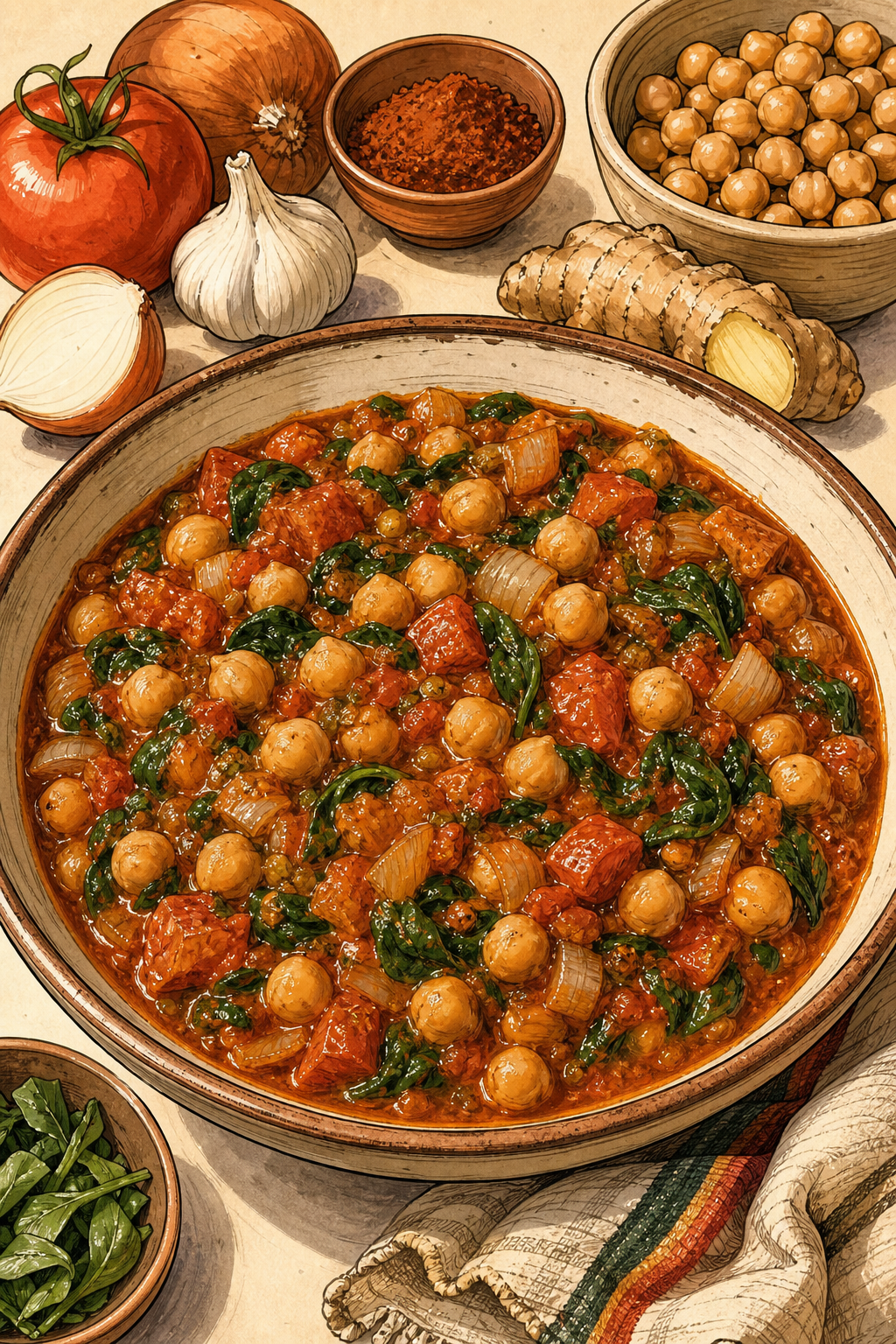
Modern Ethiopian Berbere Chickpea Stew
This clearly labeled modern meatless stew uses Ethiopian berbere and niter-kibbeh flavors with whole chickpeas; it is inspired by wat but is not presented as a named historic dish.
Plan and shop
Save this recipe for real-life cooking
Build a local shopping list or place this recipe into a weekly meal plan. No account is required.
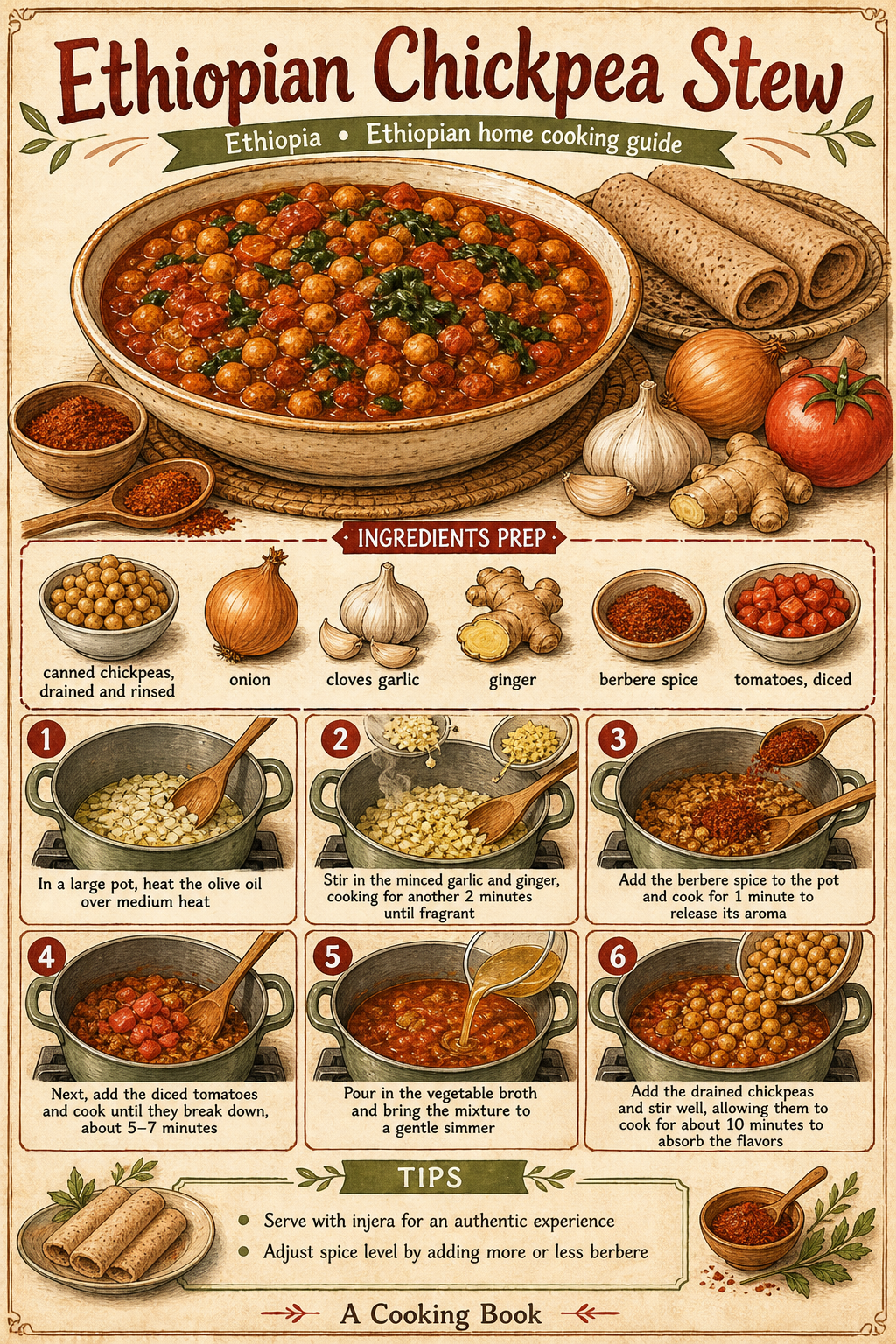
Illustrated cooking guide
Step-by-step visual method
A polished English infographic for the whole cooking flow, paired with the full written recipe below for detail and SEO.
Written method
Instructions
Read through once, then cook at your own pace with the illustrated guide above.
- 1
Cook the onion slowly until very soft and reduced.
- 2
Add niter kibbeh, garlic, ginger, berbere, and tomato paste and cook for 2 minutes.
- 3
Add chickpeas and stock and simmer uncovered for 20 minutes so the sauce thickens.
- 4
Fold in spinach and cook just until tender.
- 5
Season with salt and serve with injera, noting that this is a modern plant-based interpretation.
Cook notes
Tips
Serve with injera for an authentic experience.
Adjust spice level by adding more or less berbere.
For a thicker stew, mash some chickpeas with a fork before simmering.
Cook smarter
Helpful notes
Practical storage, serving, swap, and troubleshooting notes for a better first try.
Storage Tips
- Store any leftovers in an airtight container in the fridge for up to 3 days.
- Reheat on the stovetop, adding a splash of water if needed to loosen the stew.
- This dish can be frozen for up to 3 months; just thaw and reheat when ready to serve.
Substitutions
- Use frozen spinach instead of fresh if that's what you have on hand.
- Olive oil can be swapped with another cooking oil like canola or avocado oil.
- If you can't find berbere spice, use a mix of paprika and cayenne pepper instead.
What to Serve With
- Injera bread
- Steamed rice
- Roasted vegetables
Common Mistakes
- Not sautéing the onions long enough can lead to a lack of depth in flavor.
- Adding too much salt early on can overpower the intricacies of the spices.
- Forgetting to season at the end can make the dish taste flat.
Recipe FAQ
Can I use dried chickpeas instead of canned?
Yes, just soak and cook the dried chickpeas before using them in the recipe.
What is berbere spice?
Berbere is a traditional Ethiopian spice blend that includes chili peppers, garlic, and various spices, giving this dish its unique flavor.
Can I add other vegetables to the stew?
Certainly! You can include vegetables like carrots or bell peppers for added texture and flavor.
Kitchen tools
Helpful Tools for This Recipe
A light, editable placeholder for future partner recommendations. No real affiliate links are enabled yet.
Blender
Helpful for smooth sauces, soups, marinades, and purees.
Saucepan
Useful for simmering sauces, soups, grains, and small-batch stews.
Chef knife
A basic prep tool for vegetables, herbs, aromatics, and proteins.
Cutting board
Keeps prep organized for chopping, slicing, and staging ingredients.
Measuring spoons
Useful for balancing spices, salt, acids, and sauces.
Some links may be affiliate links. As an Amazon Associate or partner, we may earn from qualifying purchases when enabled. Read the Affiliate Disclosure.
Cook along weekly
Want more illustrated recipes like Modern Ethiopian Berbere Chickpea Stew?
Join the World Recipe Letter for global home-cooking ideas and visual recipe guides.
Join the World Recipe Letter
Get 5 illustrated recipes every week.
No account needed. Unsubscribe when email delivery is connected.
Cook next
You might also like
More flavors from the same country or nearby pantry style.
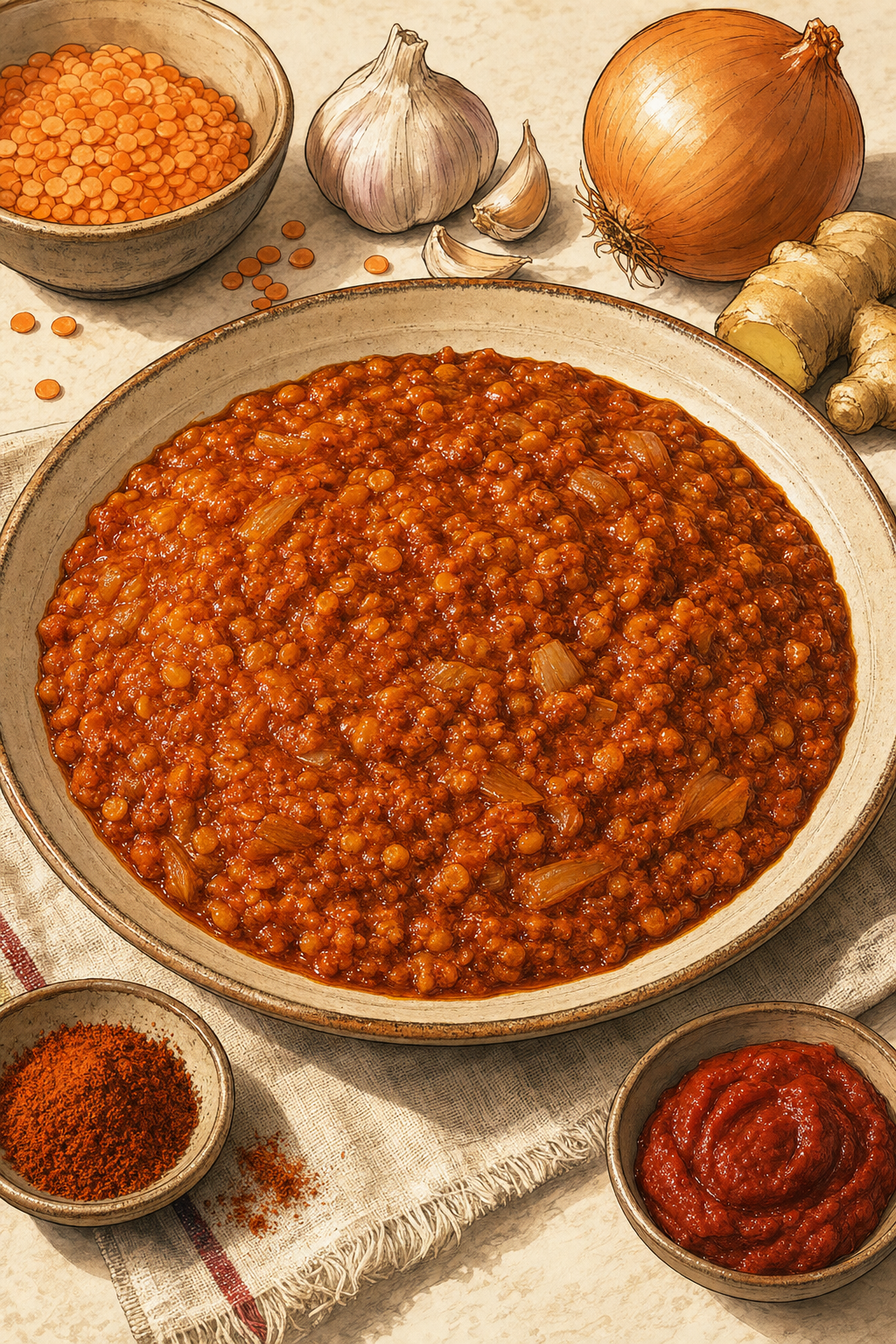
Misir Wot
A rich red lentil stew simmered with berbere, onion, garlic, ginger, and tomato.

Injera Breakfast Plate
A quick breakfast plate with injera, soft eggs, spiced tomatoes, greens, and yogurt.
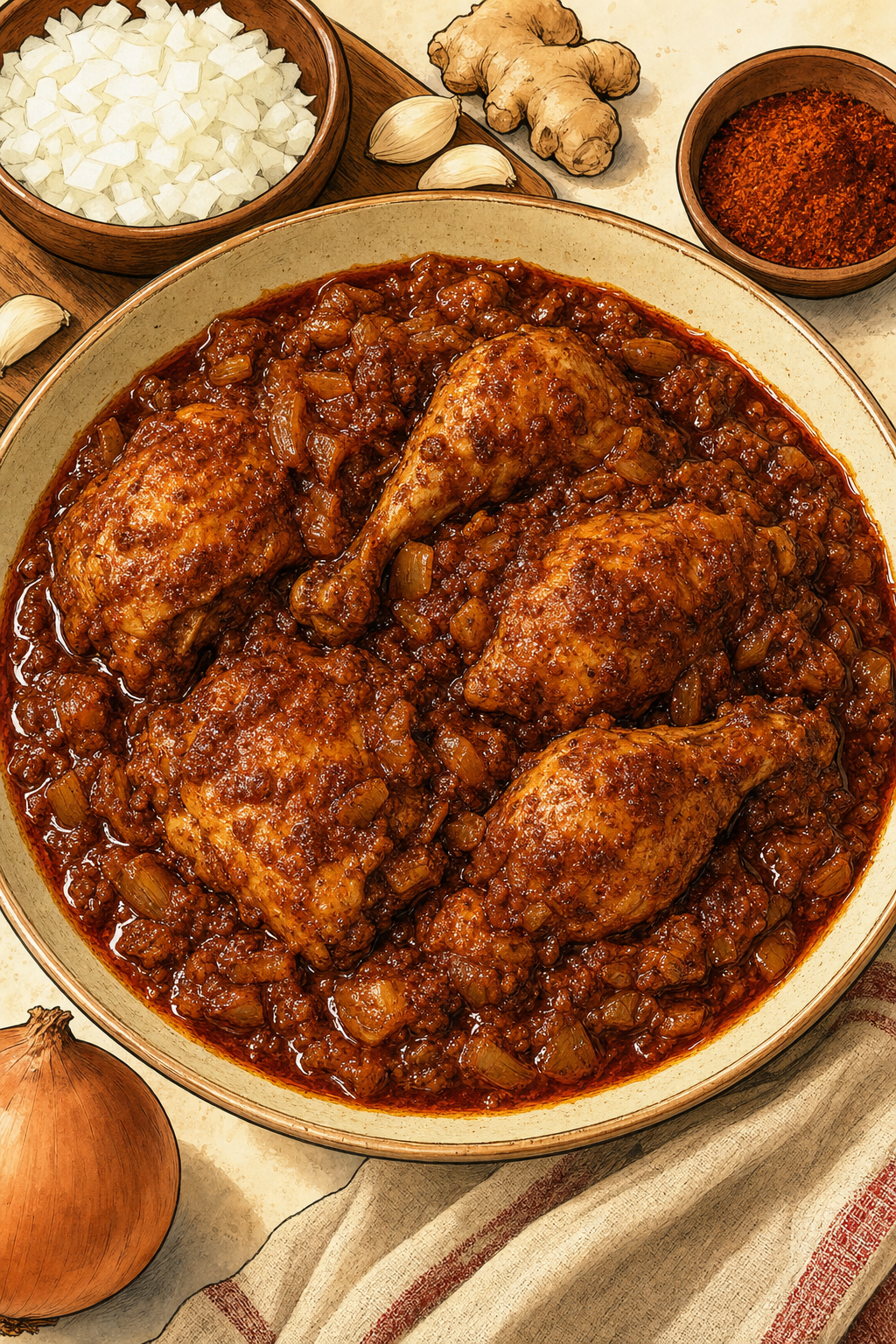
Doro Wat
Doro Wat is a traditional Ethiopian chicken stew that is spicy and rich in flavor. This dish features tender chicken simmered with a blend of spices, onions, and garlic, making it a wonderful centerpiece for any meal.