Egyptian Mombar (Rice-Stuffed Intestines)
Egyptian mombar fills thoroughly cleaned sheep casing with raw short-grain rice, tomato, onion, and abundant herbs, poaches it gently, then fries it crisp.

Plan and shop
Save this recipe for real-life cooking
Build a local shopping list or place this recipe into a weekly meal plan. No account is required.
Illustrated cooking guide
Step-by-step visual method
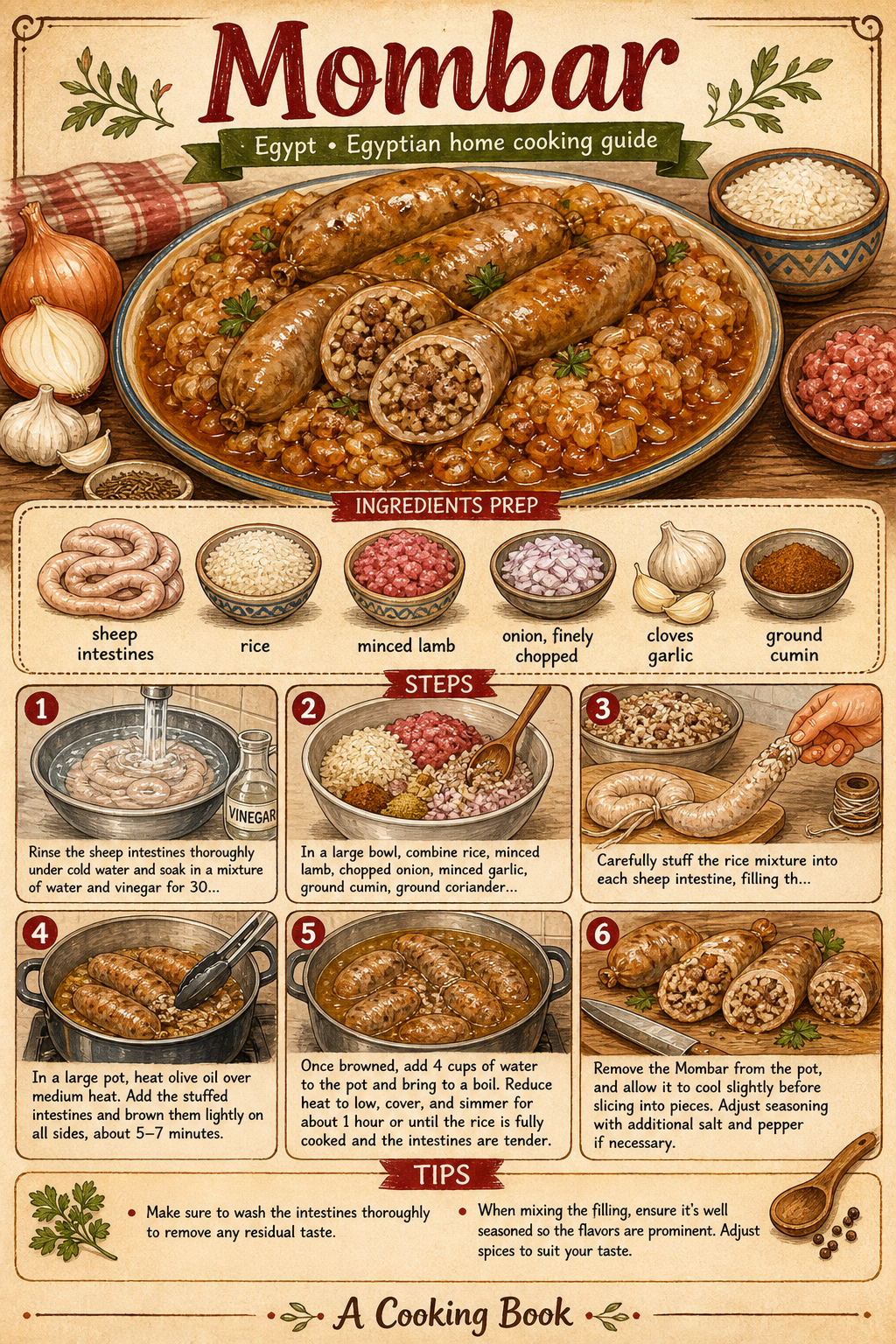
A polished English infographic for the whole cooking flow, paired with the full written recipe below for detail and SEO.
Written method
Instructions
Read through once, then cook at your own pace with the illustrated guide above.
- 1
Turn and scrub the casings repeatedly with salt, flour, and vinegar, then rinse until completely clean.
- 2
Mix raw rice, tomato, onion, herbs, tomato paste, spices, and oil.
- 3
Loosely fill each casing no more than halfway and tie into short lengths so the rice can expand.
- 4
Poach gently in seasoned broth for 35 to 45 minutes until the rice is cooked.
- 5
Drain and dry, then shallow-fry until evenly crisp and golden.
Cook notes
Tips
Never pack the filling tightly.
Poach before frying; browning raw stuffed casing first can burst it.
Cook smarter
Helpful notes
Practical storage, serving, swap, and troubleshooting notes for a better first try.
Storage Tips
- Store any leftovers in an airtight container in the refrigerator for up to 3 days.
- Reheat gently on the stovetop with a bit of water to prevent drying out.
Substitutions
- Minced beef can be used instead of minced lamb for a different flavor.
- You can use white rice instead of long-grain rice if needed.
What to Serve With
- Salata baladi
- Pickles
- Lemon wedges
Common Mistakes
- Replacing the defining Egyptian ingredient or technique with a generic shortcut.
- Rushing the stated soaking, simmering, resting, or high-heat cooking stage.
Recipe FAQ
What kind of rice should I use for Mombar?
Use long-grain rice for a better texture and flavor.
Can I use pork intestines instead?
While sheep intestines are traditional, you can use pork intestines as a substitute, though it changes the dish significantly.
What can I serve with Mombar?
Mombar pairs well with Egyptian rice, tahini sauce, or a fresh salad.
Kitchen tools
Helpful Tools for This Recipe
A light, editable placeholder for future partner recommendations. No real affiliate links are enabled yet.
Rice cooker
Good for steady rice, grains, and meal-prep bowls.
Chef knife
A basic prep tool for vegetables, herbs, aromatics, and proteins.
Cutting board
Keeps prep organized for chopping, slicing, and staging ingredients.
Measuring spoons
Useful for balancing spices, salt, acids, and sauces.
Some links may be affiliate links. As an Amazon Associate or partner, we may earn from qualifying purchases when enabled. Read the Affiliate Disclosure.
Cook along weekly
Want more illustrated recipes like Egyptian Mombar (Rice-Stuffed Intestines)?
Join the World Recipe Letter for global home-cooking ideas and visual recipe guides.
Join the World Recipe Letter
Get 5 illustrated recipes every week.
No account needed. Unsubscribe when email delivery is connected.
Cook next
You might also like
More flavors from the same country or nearby pantry style.
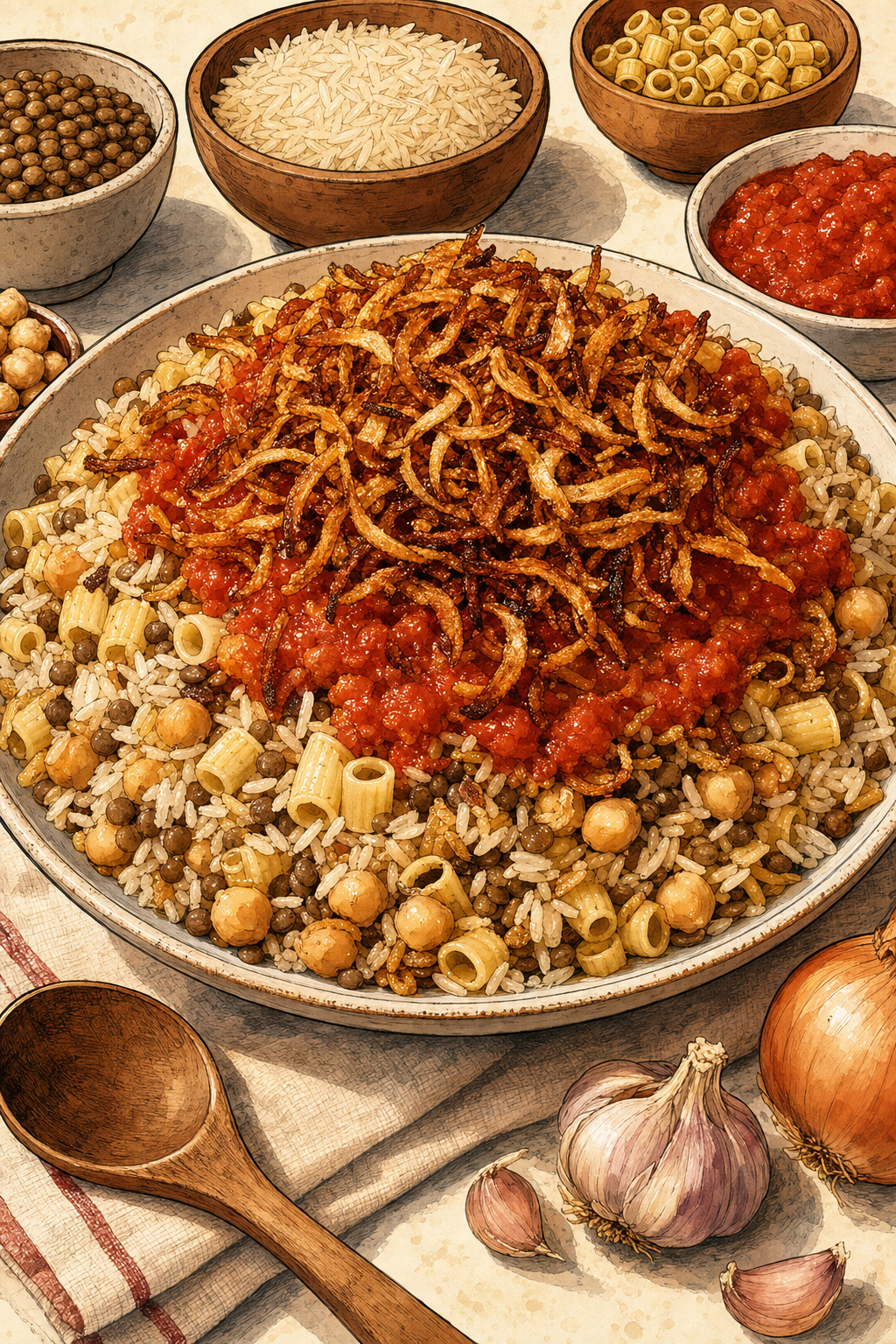
Koshari
A hearty Egyptian bowl of rice, lentils, pasta, chickpeas, tomato sauce, and crisp fried onions.

Shakshuka
Eggs gently poached in a spiced tomato and pepper sauce with garlic, cumin, paprika, and fresh herbs.
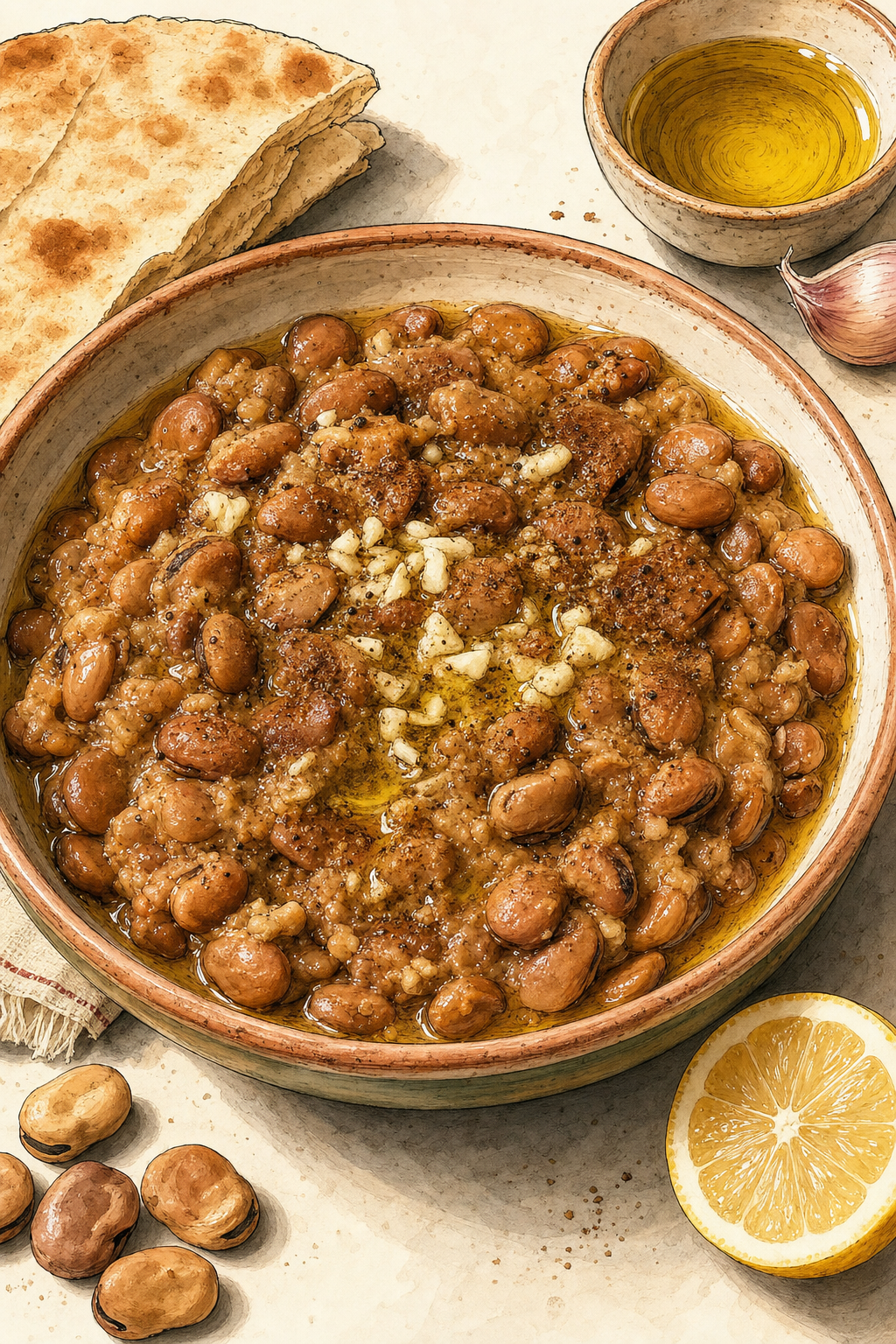
Ful Medames
Ful Medames is a traditional Egyptian dish made from fava beans simmered with spices and olive oil, often enjoyed for breakfast or as a hearty snack. This recipe is simple and packed with flavor, making it a perfect choice for home cooks looking to explore Egyptian cuisine.