Biko with Latik
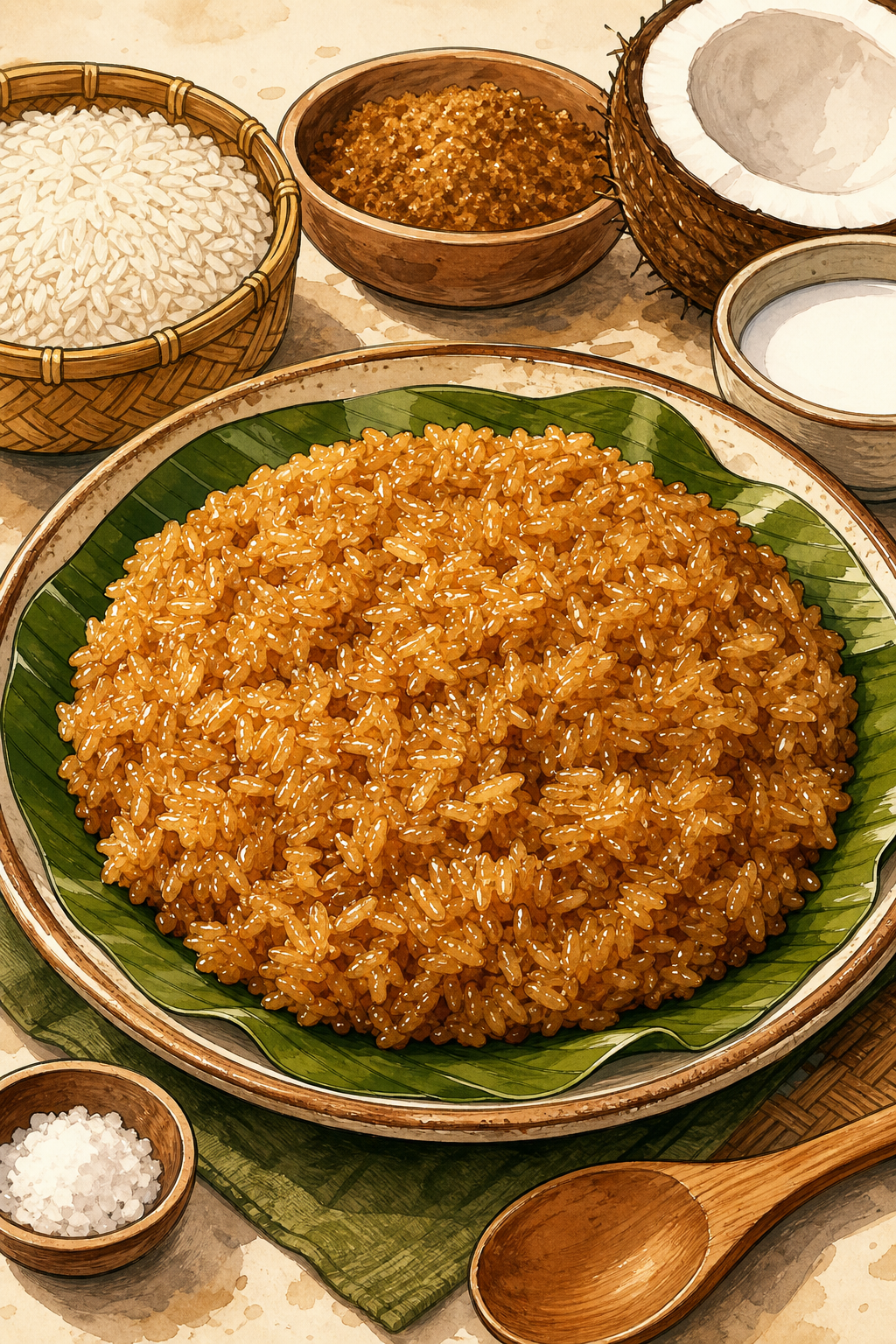
Biko is a traditional Filipino rice cake, made with glutinous rice and coconut milk, resulting in a deliciously sticky treat that's perfect for any occasion.
Plan and shop
Save this recipe for real-life cooking
Build a local shopping list or place this recipe into a weekly meal plan. No account is required.
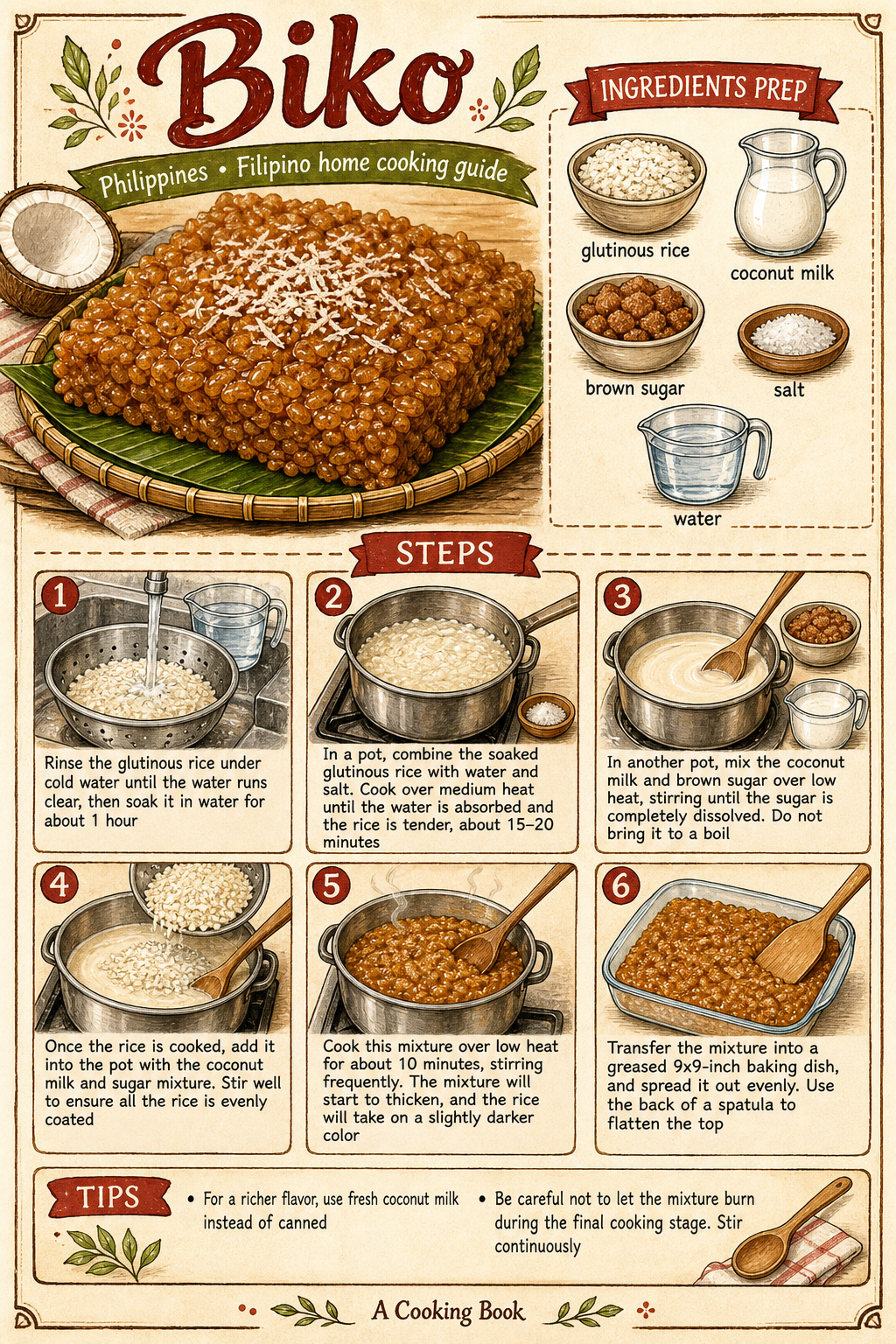
Illustrated cooking guide
Step-by-step visual method
A polished English infographic for the whole cooking flow, paired with the full written recipe below for detail and SEO.
Written method
Instructions
Read through once, then cook at your own pace with the illustrated guide above.
- 1
Cook the glutinous rice with water until tender but still slightly firm.
- 2
Simmer one can of coconut milk until the curds separate and turn golden; strain the latik and reserve the coconut oil.
- 3
Cook the remaining coconut milk with brown sugar and salt until syrupy, then fold in the rice and stir until very thick.
- 4
Press into a greased pan, bake at 350°F (175°C) until set and glossy, then top with latik before slicing.
Cook notes
Tips
Prepare all ingredients before cooking so the traditional sequence stays intact.
Taste and adjust seasoning near the end, especially when using salty preserved ingredients.
Cook smarter
Helpful notes
Practical storage, serving, swap, and troubleshooting notes for a better first try.
Storage Tips
- Store in an airtight container at room temperature for best texture.
- Refrigeration may change the consistency; reheat gently in the microwave if needed.
Substitutions
- Use brown rice if glutinous rice is unavailable, though the texture will differ.
- White sugar can be replaced with brown sugar for a similar caramel flavor.
What to Serve With
- Fresh mango slices for a sweet contrast.
- Strong coffee or tea to balance the sweetness.
Common Mistakes
- Substituting away the defining traditional ingredient changes the identity of the dish.
- Rushing the main simmering, steaming, or grilling stage can flatten the texture and flavor.
Recipe FAQ
What makes Biko with Latik distinctly Filipino?
Its defining ingredients and cooking sequence reflect the regional Filipino preparation described in this recipe.
Can I prepare it ahead?
Yes. Prepare the components ahead where practical, then finish or reheat gently so the intended texture is preserved.
Kitchen tools
Helpful Tools for This Recipe
A light, editable placeholder for future partner recommendations. No real affiliate links are enabled yet.
Rice cooker
Good for steady rice, grains, and meal-prep bowls.
Baking sheet
Useful for roasting, baking, broiling, and sheet-pan prep.
Saucepan
Useful for simmering sauces, soups, grains, and small-batch stews.
Chef knife
A basic prep tool for vegetables, herbs, aromatics, and proteins.
Cutting board
Keeps prep organized for chopping, slicing, and staging ingredients.
Some links may be affiliate links. As an Amazon Associate or partner, we may earn from qualifying purchases when enabled. Read the Affiliate Disclosure.
Cook along weekly
Want more illustrated recipes like Biko with Latik?
Join the World Recipe Letter for global home-cooking ideas and visual recipe guides.
Join the World Recipe Letter
Get 5 illustrated recipes every week.
No account needed. Unsubscribe when email delivery is connected.
Cook next
You might also like
More flavors from the same country or nearby pantry style.
Chicken Adobo
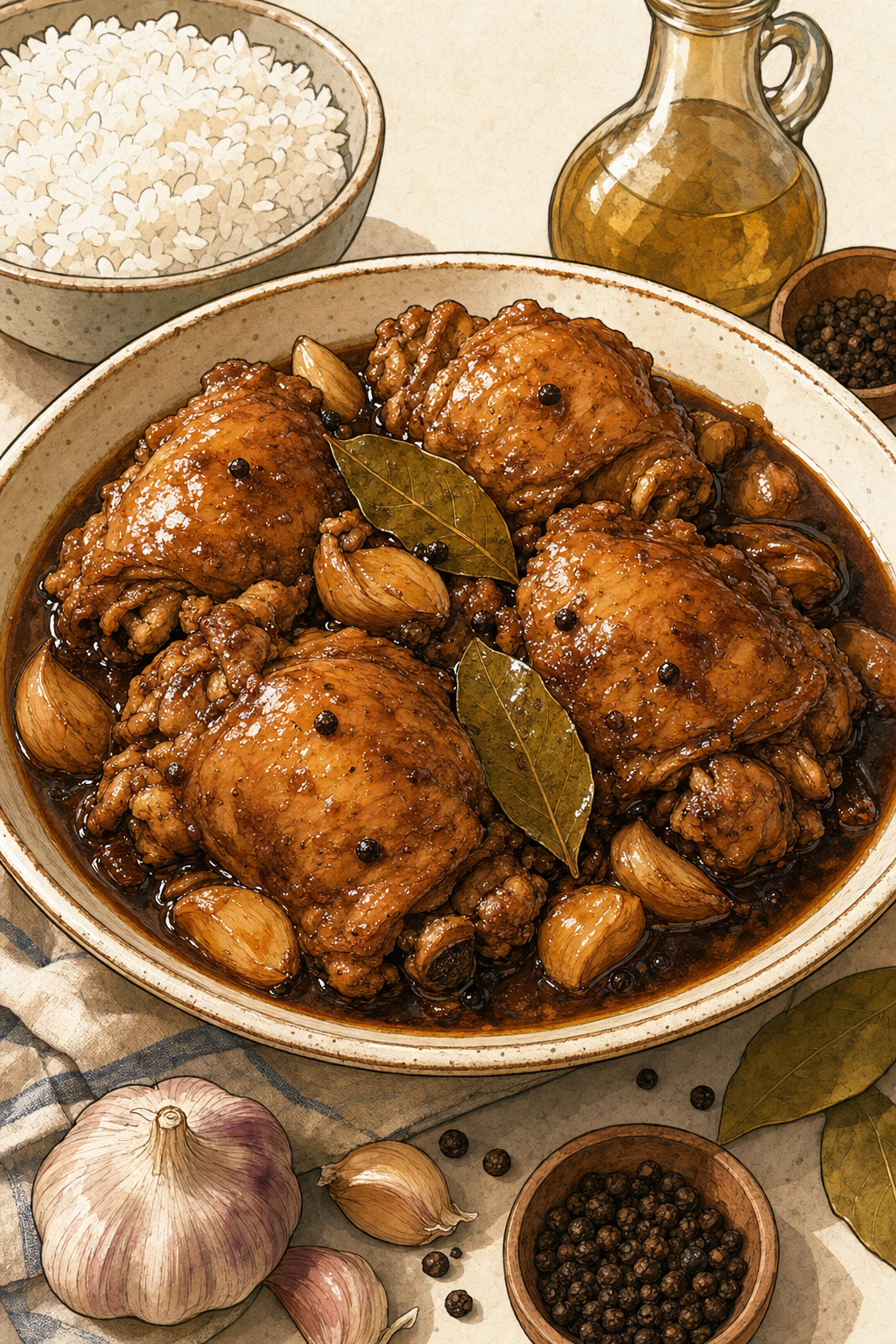
Tender chicken simmered in vinegar, soy sauce, garlic, bay leaves, and pepper until glossy and deeply savory.
Garlic Fried Rice with Egg
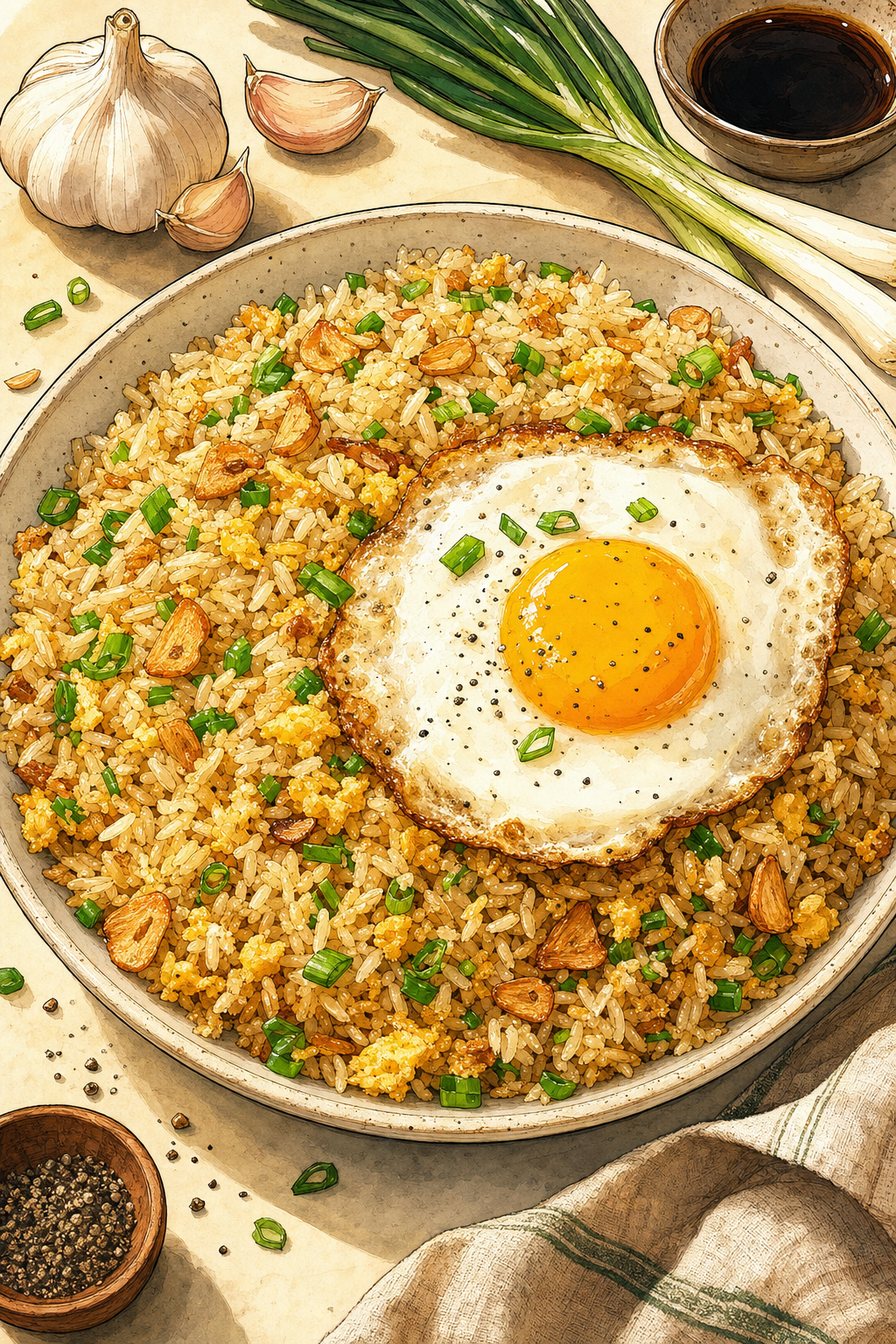
A simple Filipino-style breakfast rice with crisp garlic, day-old rice, scallions, and a sunny egg.
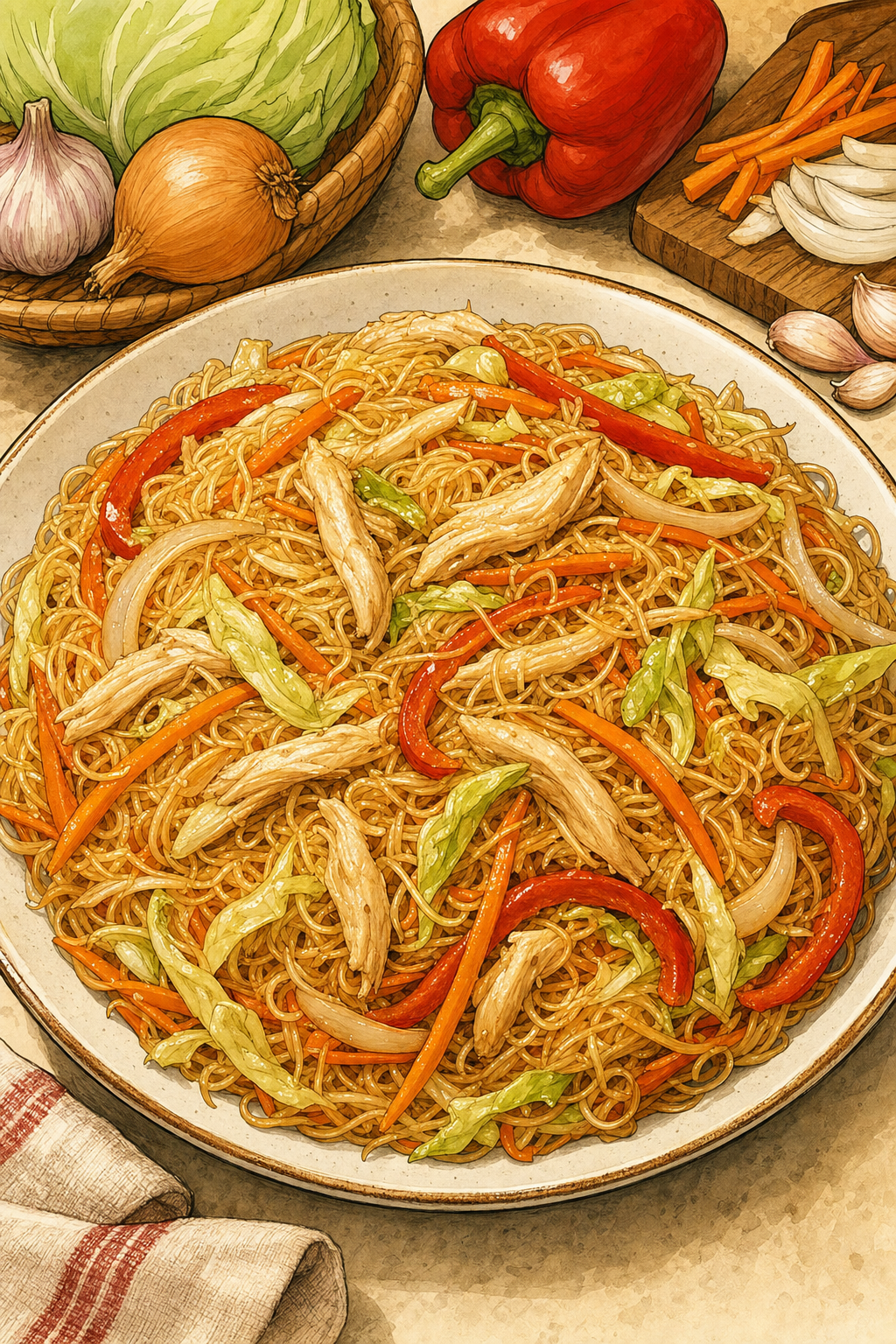
Pancit Bihon
Pancit Bihon is a delightful Filipino noodle stir-fry, featuring rice noodles tossed with fresh vegetables and protein, making it a favorite for celebrations and family gatherings.