Ginger Scallion Lobster
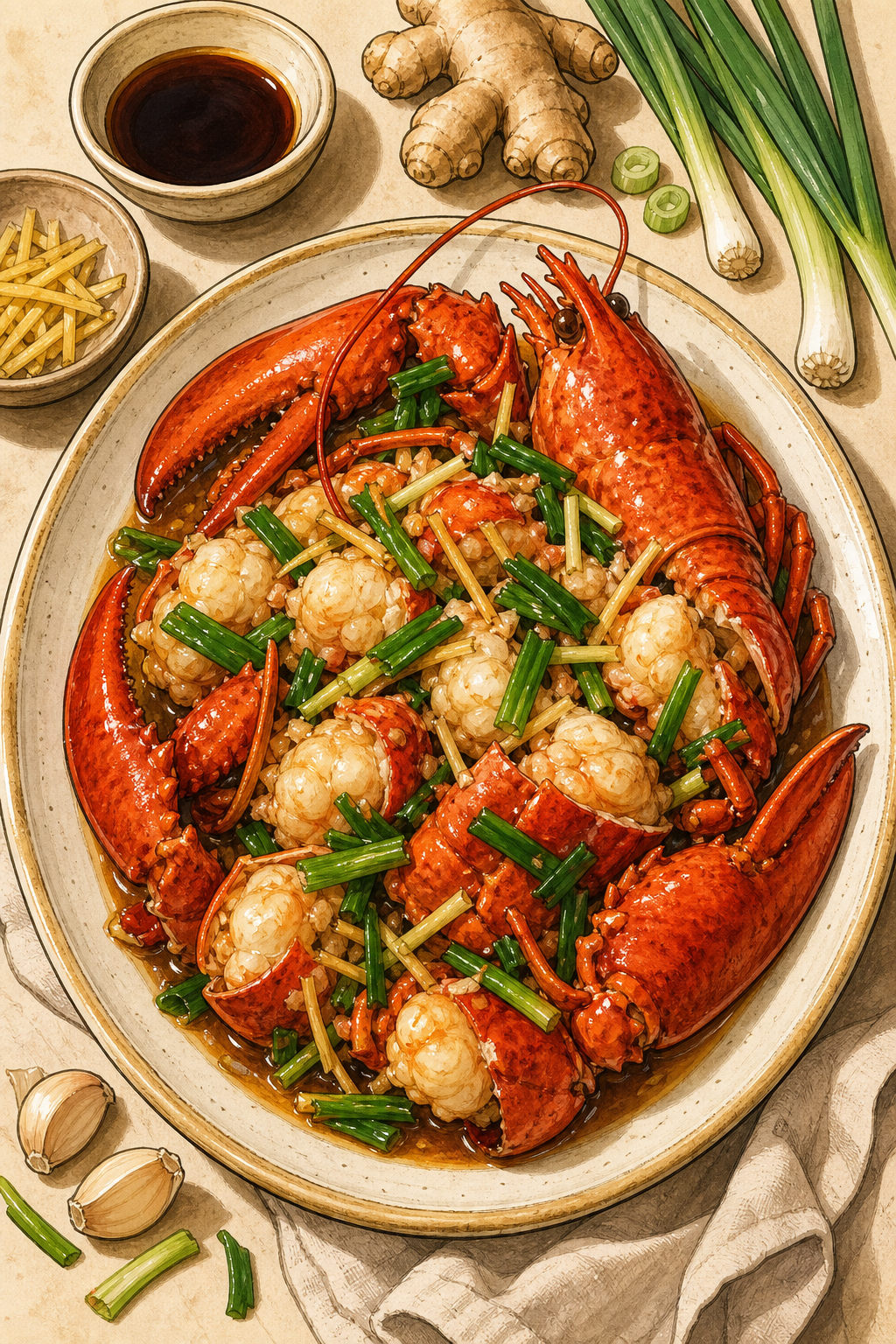
Ginger Scallion Lobster is a classic Chinese dish that highlights the delicate flavors of fresh lobster paired with aromatic ginger and scallions. This recipe is simple enough for home cooks to prepare, bringing the taste of authentic Chinese cuisine to your table.
Plan and shop
Save this recipe for real-life cooking
Build a local shopping list or place this recipe into a weekly meal plan. No account is required.
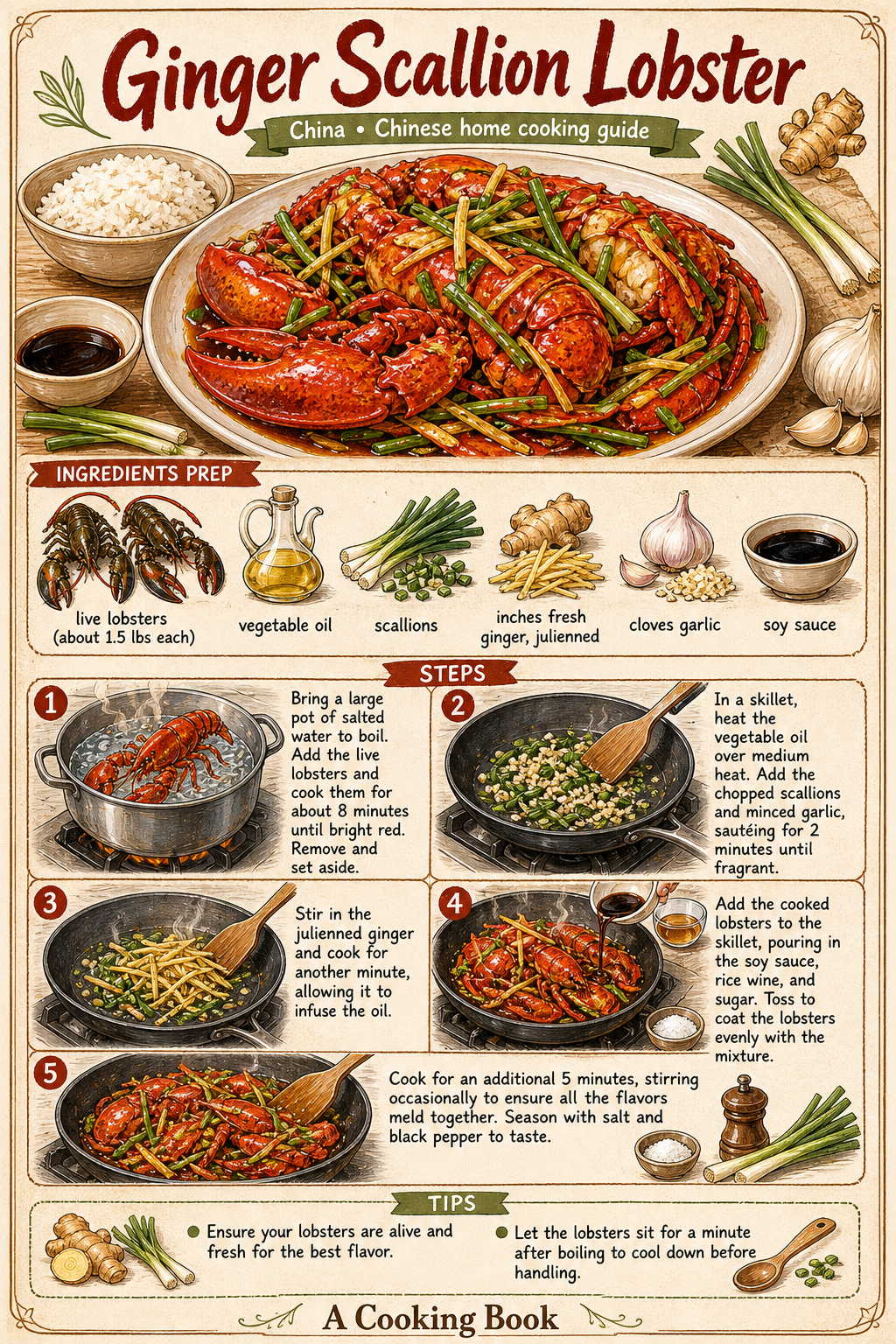
Illustrated cooking guide
Step-by-step visual method
A polished English infographic for the whole cooking flow, paired with the full written recipe below for detail and SEO.
Written method
Instructions
Read through once, then cook at your own pace with the illustrated guide above.
- 1
Lightly coat the exposed lobster meat with cornstarch. Shallow-fry the pieces in hot oil until the shells turn red and the coating seals, then drain.
- 2
Leave about 2 tablespoons oil in a hot wok. Add ginger, garlic, and the white parts of the scallions; stir-fry until fragrant.
- 3
Return the lobster to the wok, add rice wine, soy sauce, sugar, and a small splash of water, then cover for 2-3 minutes until just cooked.
- 4
Uncover, toss over high heat until the sauce clings to the lobster, fold in the green scallion parts, and serve immediately.
Cook notes
Tips
Ensure your lobsters are alive and fresh for the best flavor.
Let the lobsters sit for a minute after boiling to cool down before handling.
Cook smarter
Helpful notes
Practical storage, serving, swap, and troubleshooting notes for a better first try.
Storage Tips
- Refrigerate leftovers in an airtight container for up to 2 days.
- Reheat gently on low heat to avoid overcooking the lobster.
- Avoid freezing cooked lobster as it can affect the texture.
Substitutions
- If you don't have soy sauce, try tamari for a gluten-free option.
- Use shallots instead of scallions if preferred.
- Ginger powder can replace fresh ginger in a pinch, though the flavor will be different.
What to Serve With
- Steamed jasmine rice
- Stir-fried vegetables
- Garlic noodles
Common Mistakes
- Don't overcook the lobsters, as this can make them tough and rubbery.
- Ensure to season correctly as soy sauce can sometimes be salty enough on its own.
- Avoid skipping the ginger and scallions, as they are essential for authentic flavor.
Recipe FAQ
Can I use frozen lobster for this recipe?
Fresh lobster is recommended for the best flavor, but if frozen is your only option, ensure it's fully thawed before cooking.
What rice wine can I use?
Shaoxing rice wine is traditionally used, but you can substitute it with dry sherry if unavailable.
Can I serve this dish cold?
This dish is best served hot, but leftovers can be enjoyed cold if desired.
Kitchen tools
Helpful Tools for This Recipe
A light, editable placeholder for future partner recommendations. No real affiliate links are enabled yet.
Wok
Helpful for stir-fries, fried rice, and fast high-heat noodle dishes.
Rice cooker
Good for steady rice, grains, and meal-prep bowls.
Blender
Helpful for smooth sauces, soups, marinades, and purees.
Chef knife
A basic prep tool for vegetables, herbs, aromatics, and proteins.
Cutting board
Keeps prep organized for chopping, slicing, and staging ingredients.
Some links may be affiliate links. As an Amazon Associate or partner, we may earn from qualifying purchases when enabled. Read the Affiliate Disclosure.
Cook along weekly
Want more illustrated recipes like Ginger Scallion Lobster?
Join the World Recipe Letter for global home-cooking ideas and visual recipe guides.
Join the World Recipe Letter
Get 5 illustrated recipes every week.
No account needed. Unsubscribe when email delivery is connected.
Cook next
You might also like
More flavors from the same country or nearby pantry style.
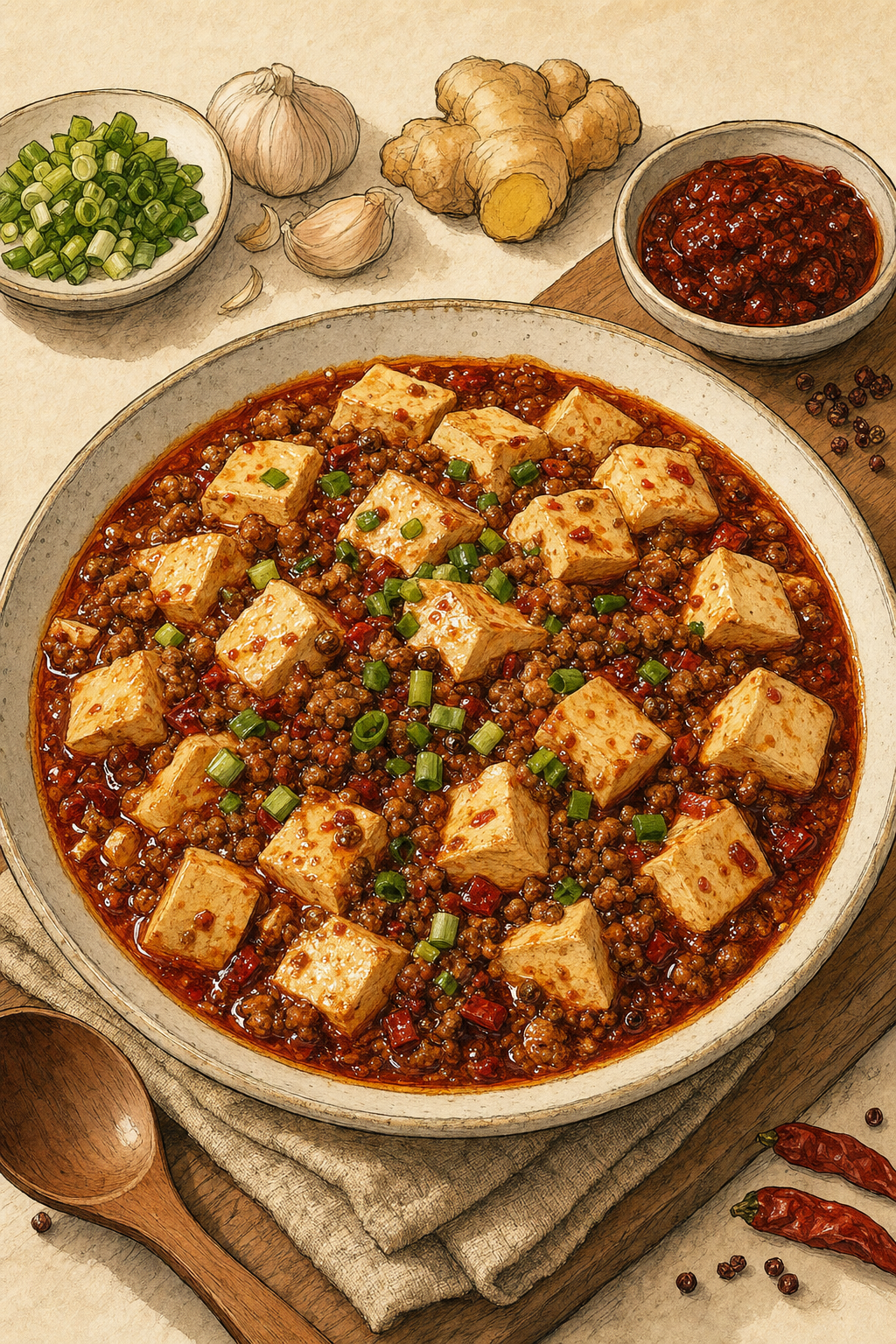
Mapo Tofu
Silky tofu in a spicy Sichuan sauce with fermented bean paste, garlic, and scallions.
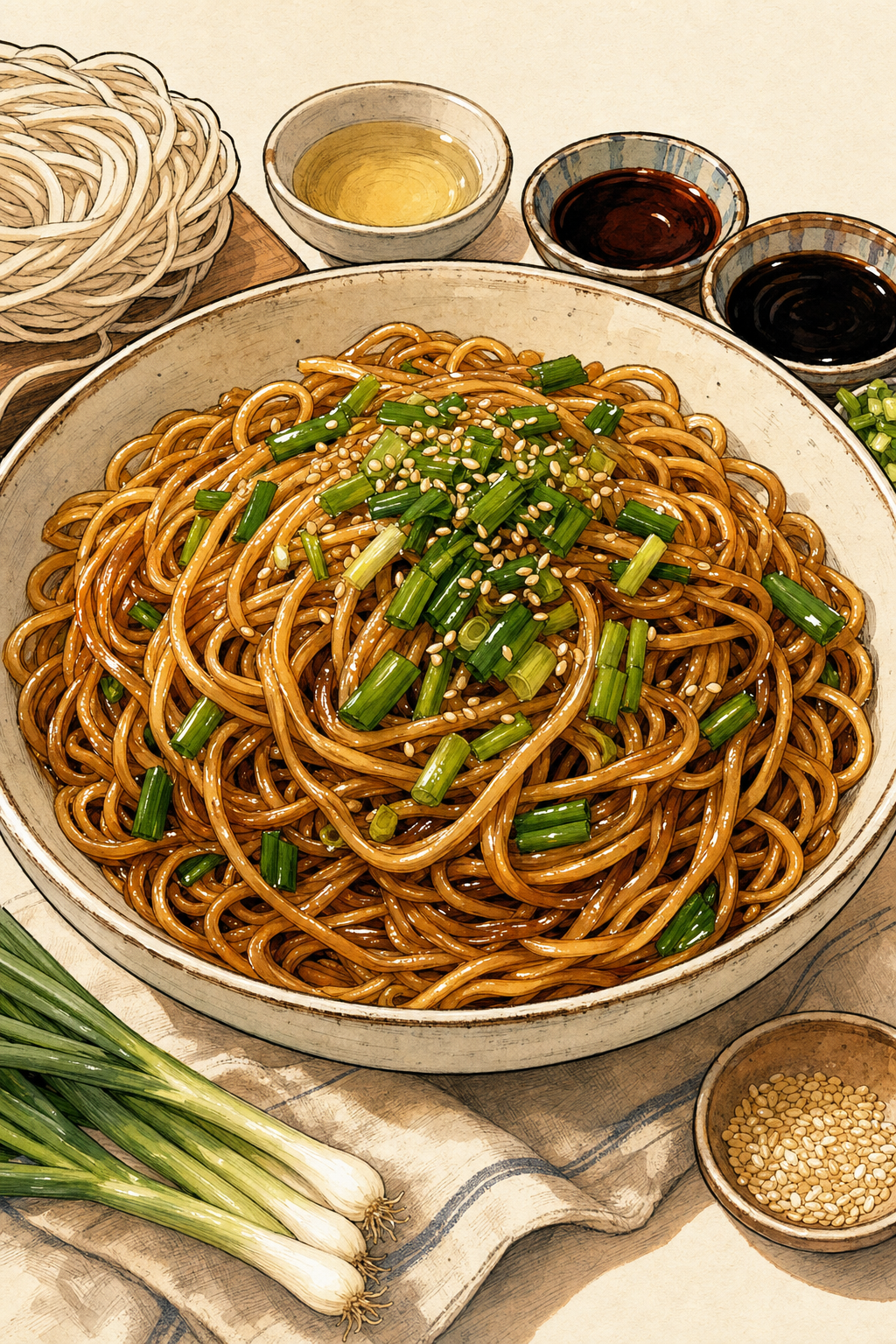
Scallion Oil Noodles
Springy noodles tossed in fragrant scallion oil with soy sauce and a touch of sugar.
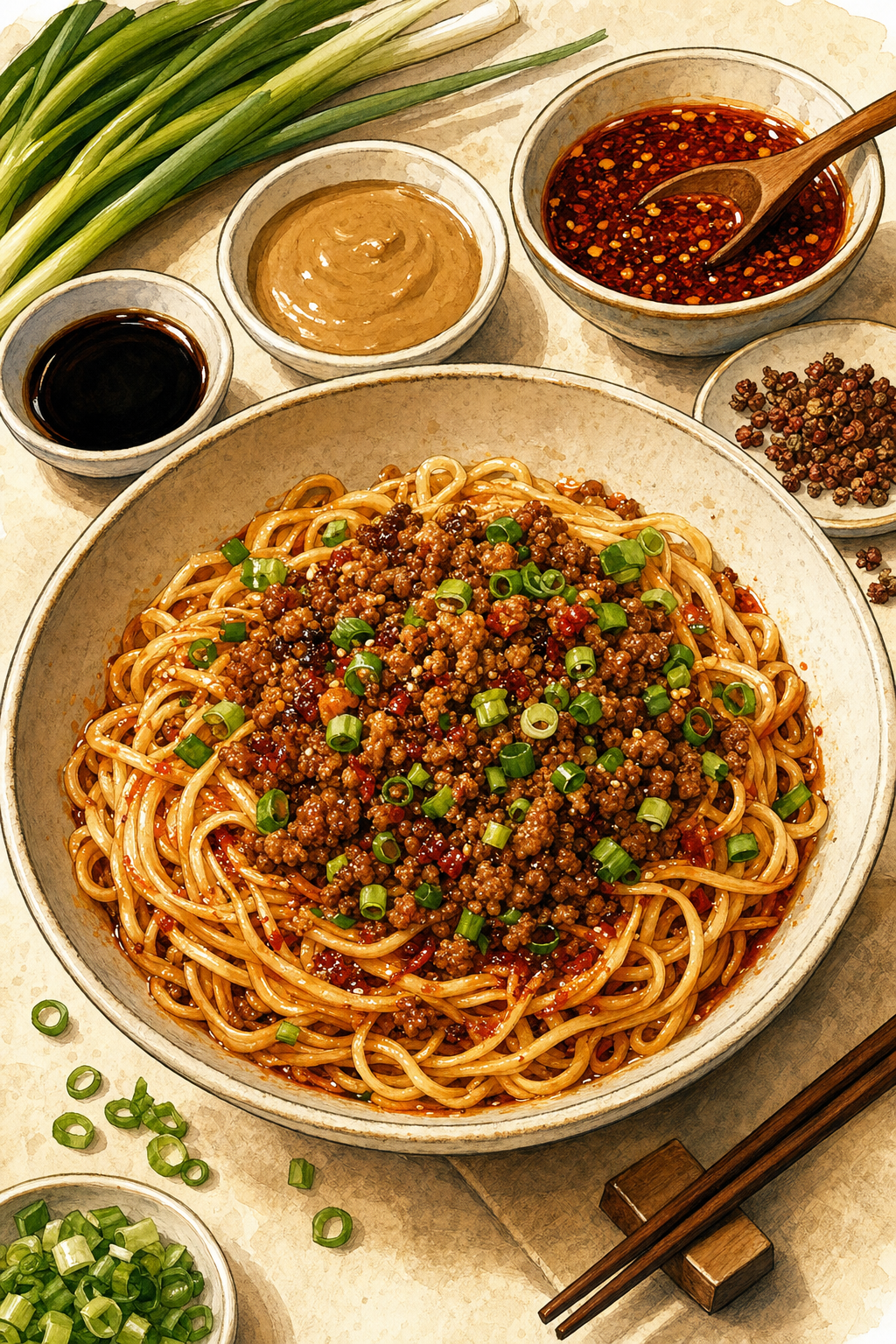
Dan Dan Noodles
Springy noodles tossed with sesame-chile sauce, savory pork, scallions, and a gentle Sichuan pepper tingle.