Ramazan Pidesi (Turkish Ramadan Bread)
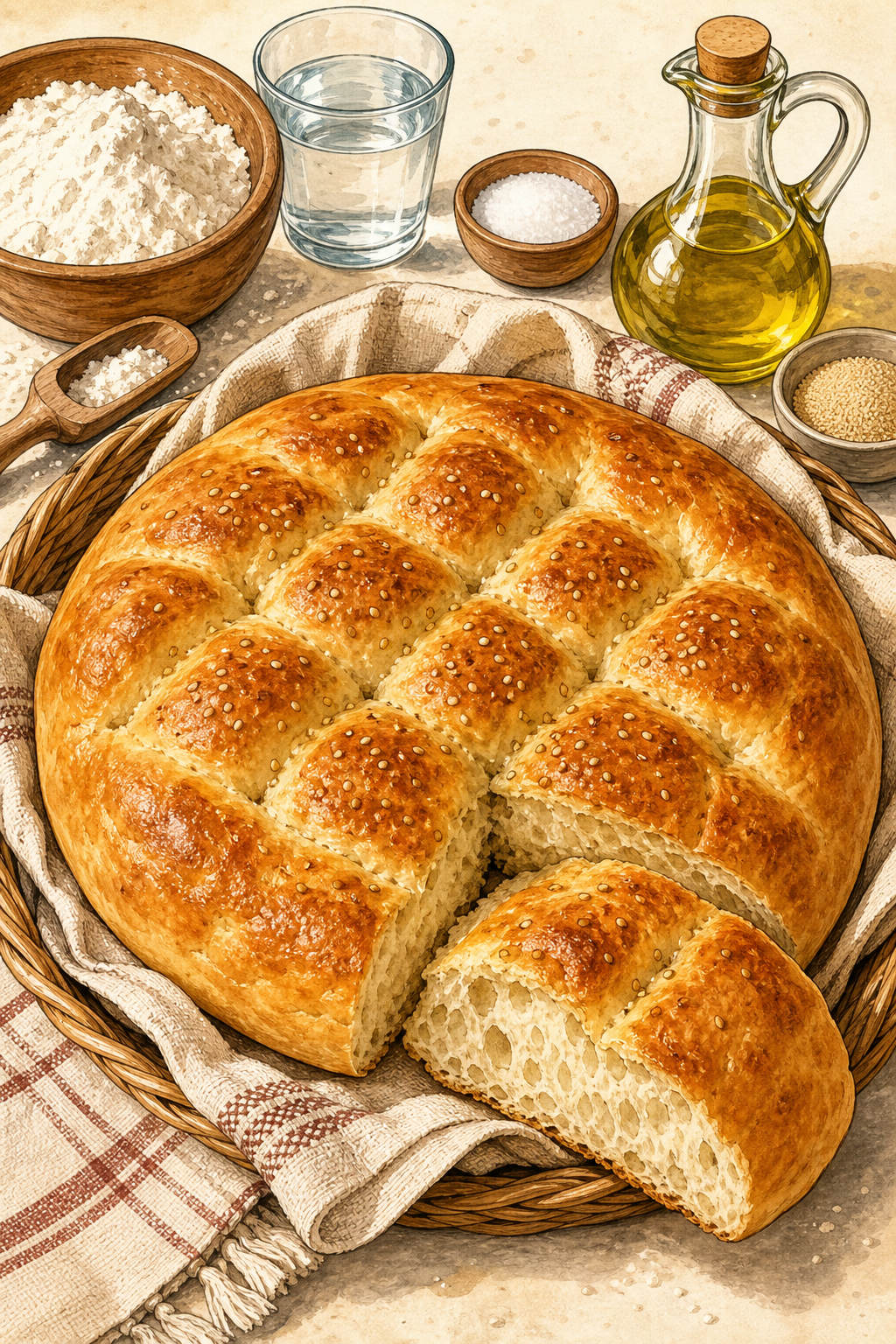
Ramazan pidesi is a soft, round Turkish flatbread marked with a deep diamond grid and topped with sesame and nigella seeds.
Plan and shop
Save this recipe for real-life cooking
Build a local shopping list or place this recipe into a weekly meal plan. No account is required.
Illustrated cooking guide
Step-by-step visual method
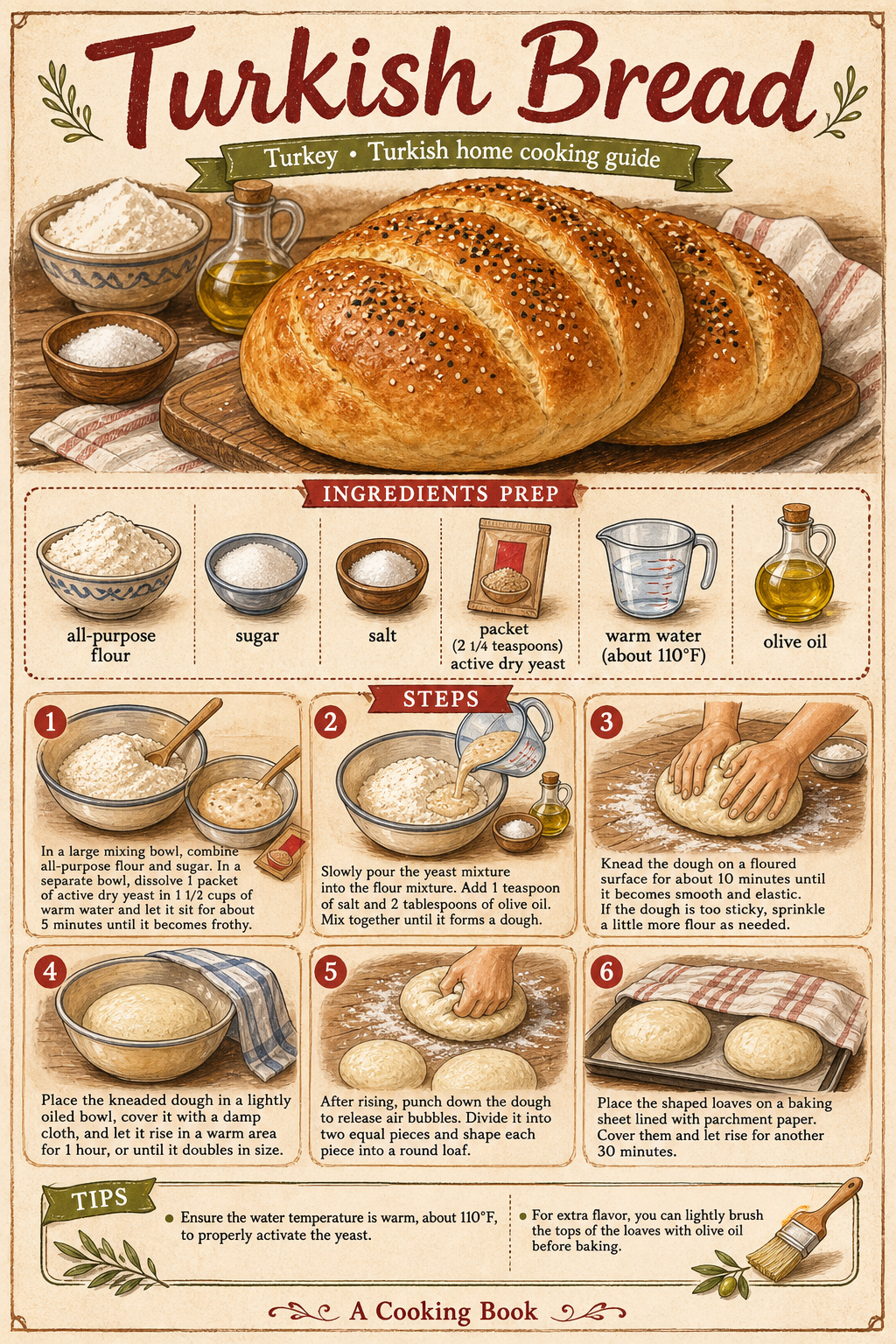
A polished English infographic for the whole cooking flow, paired with the full written recipe below for detail and SEO.
Written method
Instructions
Read through once, then cook at your own pace with the illustrated guide above.
- 1
Mix the flour, yeast, sugar, salt, warm water, and olive oil into a soft, slightly sticky dough.
- 2
Knead until elastic, cover, and let rise until doubled, about 1 hour.
- 3
Divide into two rounds and gently flatten each on parchment. Rest for 20 minutes.
- 4
Whisk the egg yolk, yogurt, and water. Brush the dough generously.
- 5
With wet fingertips, press a deep border and diamond grid into each round without cutting through.
- 6
Sprinkle with sesame and nigella seeds and bake at 230°C (445°F) until deeply golden, 12-16 minutes.
- 7
Cool under a clean towel for a soft crust.
Cook notes
Tips
Ensure the water temperature is warm, about 110°F, to properly activate the yeast.
For extra flavor, you can lightly brush the tops of the loaves with olive oil before baking.
Cook smarter
Helpful notes
Practical storage, serving, swap, and troubleshooting notes for a better first try.
Storage Tips
- Wrap leftover bread in plastic wrap to keep it fresh for 1-2 days.
- Freeze bread slices to enjoy later; simply thaw and reheat as needed.
Substitutions
- If you don't have all-purpose flour, you can use bread flour for a chewier texture.
- Olive oil can be replaced with melted butter for a different flavor profile.
What to Serve With
- Olives and feta cheese for a traditional Turkish breakfast.
- Soup or stew for a complete meal.
- Salad as a refreshing side dish.
Common Mistakes
- Not allowing the dough enough time to rise can result in dense bread.
- Using water that is too hot can kill the yeast, preventing proper rising.
Recipe FAQ
How do I store leftover Turkish bread?
Wrap the bread tightly in plastic wrap or foil and store it at room temperature for up to 2 days. For longer storage, freeze it.
Can I make this bread without yeast?
This recipe relies on yeast for leavening. For an alternative, consider a quick bread recipe that does not use yeast.
Why is my bread not rising?
Make sure your yeast is fresh and the water temperature is not too hot or too cold. Yeast needs the right conditions to activate.
Kitchen tools
Helpful Tools for This Recipe
A light, editable placeholder for future partner recommendations. No real affiliate links are enabled yet.
Baking sheet
Useful for roasting, baking, broiling, and sheet-pan prep.
Skillet
Useful for browning, quick sautes, and weeknight one-pan cooking.
Chef knife
A basic prep tool for vegetables, herbs, aromatics, and proteins.
Cutting board
Keeps prep organized for chopping, slicing, and staging ingredients.
Measuring spoons
Useful for balancing spices, salt, acids, and sauces.
Some links may be affiliate links. As an Amazon Associate or partner, we may earn from qualifying purchases when enabled. Read the Affiliate Disclosure.
Cook along weekly
Want more illustrated recipes like Ramazan Pidesi (Turkish Ramadan Bread)?
Join the World Recipe Letter for global home-cooking ideas and visual recipe guides.
Join the World Recipe Letter
Get 5 illustrated recipes every week.
No account needed. Unsubscribe when email delivery is connected.
Cook next
You might also like
More flavors from the same country or nearby pantry style.
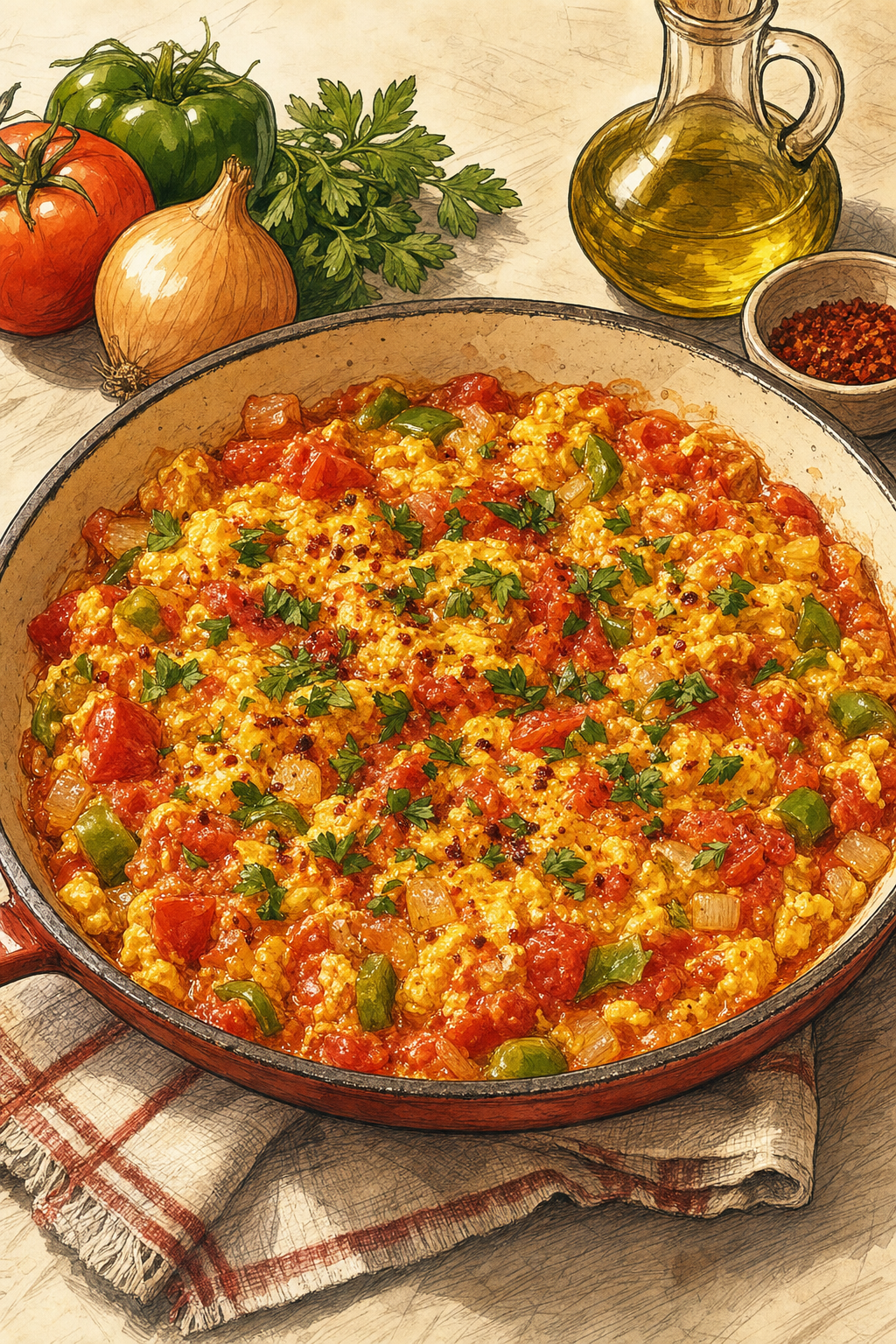
Menemen
Soft scrambled eggs with tomatoes, peppers, onion, olive oil, and warm spice.

Lentil Kofta
Tender red lentil and bulgur patties with tomato paste, parsley, lemon, and spice.

Imam Bayildi
Tender eggplant filled with tomato, onion, garlic, olive oil, and herbs for a silky Turkish vegetable dish.